Another Way to Go: 6 artists, 12 directions

I am really interested in the ideas of artistic voice, identity and recognition.

Over the summer I had a number of artists approach me with questions about their portfolios, marketing and pricing, etc. In looking at some of these I saw so many artists that were kind of all over the map with regard to style and technique – you know, the kind where each and every artwork looked like it might have been the work of a different person.

I advised them to pick something and stick with it for a while so they could really become a master at something and not be just okay at a lot of different things. I wanted them to tap into that part of themselves that really defines them – to find their voice.  I believe that mature successful artists are keenly aware of their voice. Not to say that artists don’t explore different things – ideas get resolved in different media, subject matter changes, etc. As a collector and a consultant, what I want to be able to see is, that as the works change, I can still tell it is the work of one artist and not some other artist entirely.

This past year, I was invited to curate a show this month at VERTIGO Art Space in Denver (Jan4-February11; www.vertigoartspace.com)  and so I used this line of thinking as the starting point for the show and – wow! I quickly realized what a hot button topic this is…almost everyone has something to say about it.  A lot of artists feel basically the same way. Others think I am looking at it from a business point-of-view and that I didn’t get art at all.  I think some were offended that I would point out consistencies in their work because there is such a drive to be original and fresh and authentic.

Some gallerists told me that they value creativity over commercialism – others pointed to the realities of business, that for a gallery to stay in business, eventually something has to sell and customers’ expectations often drive that process.  Artists told me the art they were showing in the galleries wasn’t what they really wanted to be working on- that they want to try something new but that the gallery wouldn’t go for it. Critics were calling artists “Johnny One Note” because they had been there – done that – seen it before. One artist selected for this show told me that as soon as the “recognized” series changed in favor of something else, the collectors, critics & galleries stopped even looking at the work.

I looked at my own work – as an artist, I am almost always associated with the burnout vellum pieces, but then I go off and explore other tangents like the series of 3000 photographs of sidewalks or the watercolors or the monochromatic eggshell compositions.

As I continued with the exploration for this show, I really began looking at the various tangents or diversions that many artists take.

Over the holidays my partner & I had a party and there wound up being a great mix of people, some artists, some gallerists, some of his running buddies, mutual friends, neighbors, a little family.  That night one our longtime friends came over to me and commented on my burnout vellum pieces – “You know I appreciate and I get where you are going with them, but when are you going to go back to those colorful paintings you did 10-15 years ago?” Later that same night, another friend came to me and wanted to know about some new etchings I had done, “You know I appreciate them and I like the use of color, but when are you going back to the monochromatic burnout pieces?”

I’m now more interested in the issues around the idea of having that identifiable, sellable body of work … the advantages this affords an artist and the potential challenges of restricting creative exploration. There is a balance between the exposure and commercial success that recognition provides and the harness restricting creative exploration.

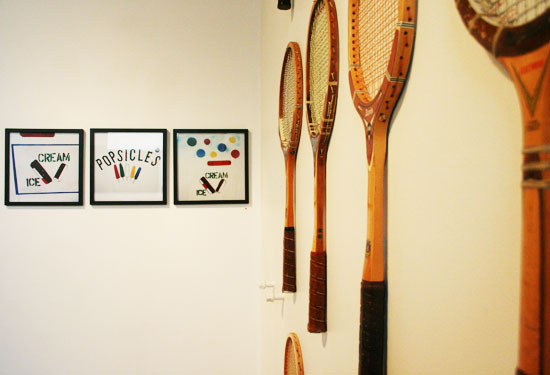
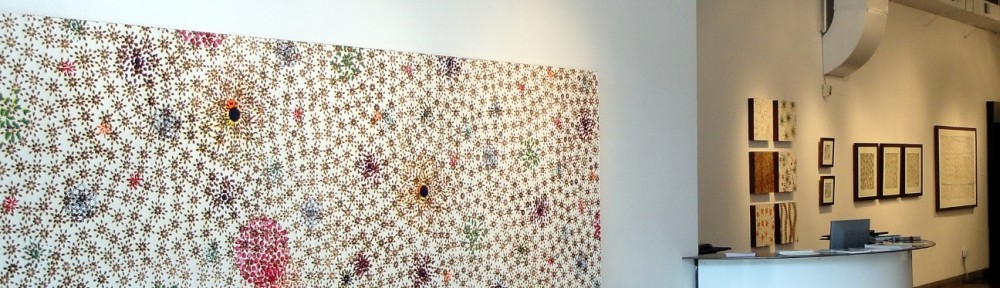
The 6 artists that I included in the show present 2 pieces – one that would be from their recognizable body of work and then another that is unrelated and not immediately identified as belonging to the same artist.

Tyler Aiello, Courtesy of Space Gallery, Photo by Westword.

Eric Michael Corrigan, Courtesy of Walker Fine Art, Photo by Westword.

Lorelei Schott, Courtesy of Sandra Phillips Gallery, Photo by Westword
Jimmy Sellars, Courtesy of Sellars Preject Space
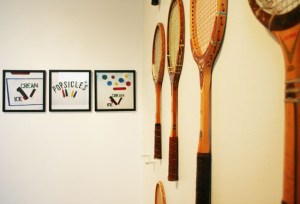
Phil Bender, Courtesy of Pirate : Contemporary Art,
Photo by Westword

Sangeeta Reddy, Courtesy of William Havu Gallery

Phil Bender, Courtesy of Pirate: Cotemporary Art

Sangeeta Reddy, Courtesy of William Havu Gallery

Lorelei Schott, Courtesy of Sandra Phillips Gallery
Clyfford Still Museum Opens

Last night my partner and I went to the opening of the Clyfford Still Museum here in Denver.  WOW!  It is amazing!

The inaugural exhibit it thoughtfully curated – offering a chronological view of his work spanning his career. I think, for me what struck me the most was seeing the evolution of the work. The show clearly presents a progression beginning with landscapes and portraits, quickly leading us into his exploration of abstraction and ultimately his readily identifiable expressionist pieces.

I was anticipating the darker, heavier pieces that represented his agrarian roots during the depression but didn’t anticipate the lighter, more cheerful works. These treasures, hidden for so many years, are a bit like giants awaking from their slumber – still stretching out and beginning to tell their stories.

The rooms are perfectly proportioned and sequenced to showcase his art with carefully constructed vantage points revealing from one gallery, the next.  The honeycomb ceiling allows natural light to permeate the concrete building, providing ideal viewing conditions while louvers protect the artwork from the damaging sun.  The two-story building, designed by Brad Cloepfil of Allied Works Architecture is refined – it is an elegant solution to display the work and to house art being stored, archived & researched.

ABOUT CLYFFORD STILL

Clyfford Still’s work was marked by expressive brush work, and abstracted forms – the blending of color, texture and shape to create something entirely new. His shift away from figurative and surrealist styles in the late 30’s and early 40’s happened nearly a decade before other artists including Willem de Kooning, Franz Kline, Jackson Pollock, Mark Rothko and Barnett Newman began the pursuit of what is now known as Abstract Expressionism. His estate, along with that of his wife, has been left to the city and will be maintained by the museum – it represents the bulk(94%) of Still’s life work – some 2400 paintings, works on paper and sculptures.

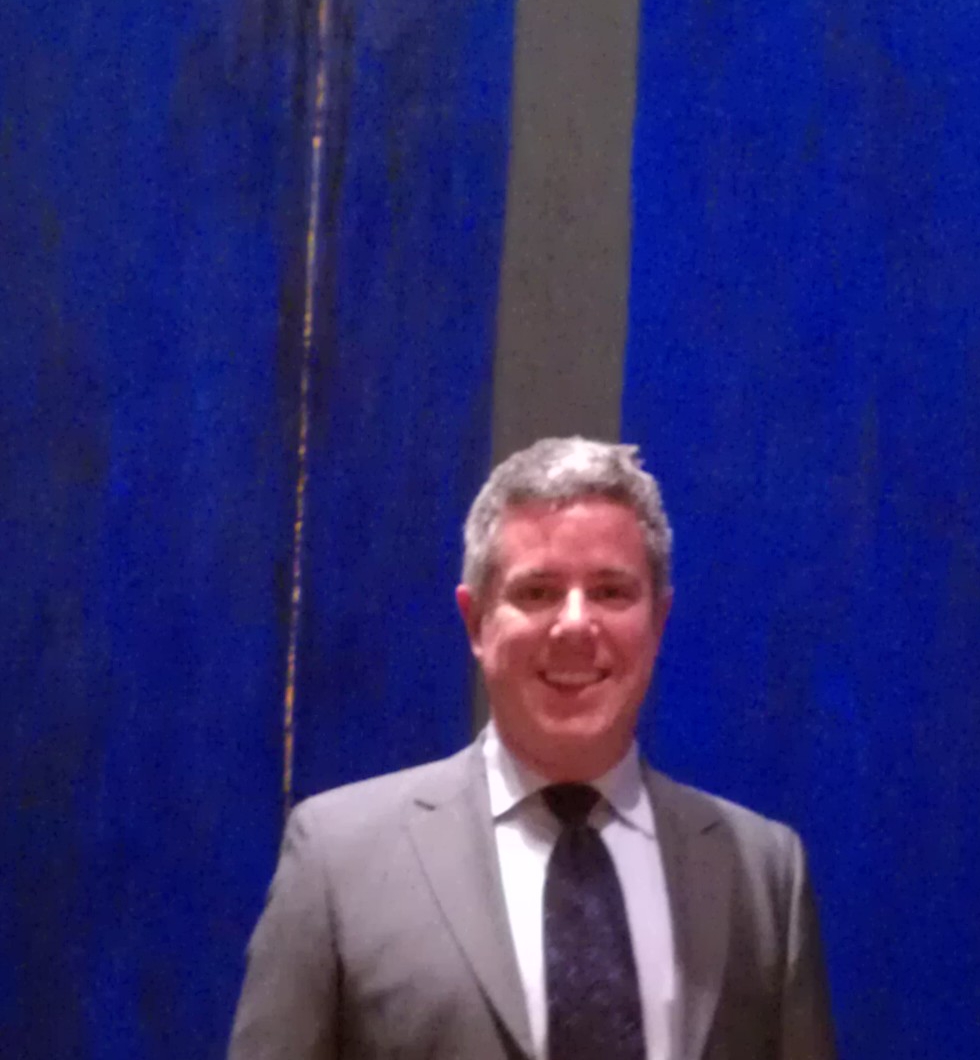
At the Clyfford Still Opening

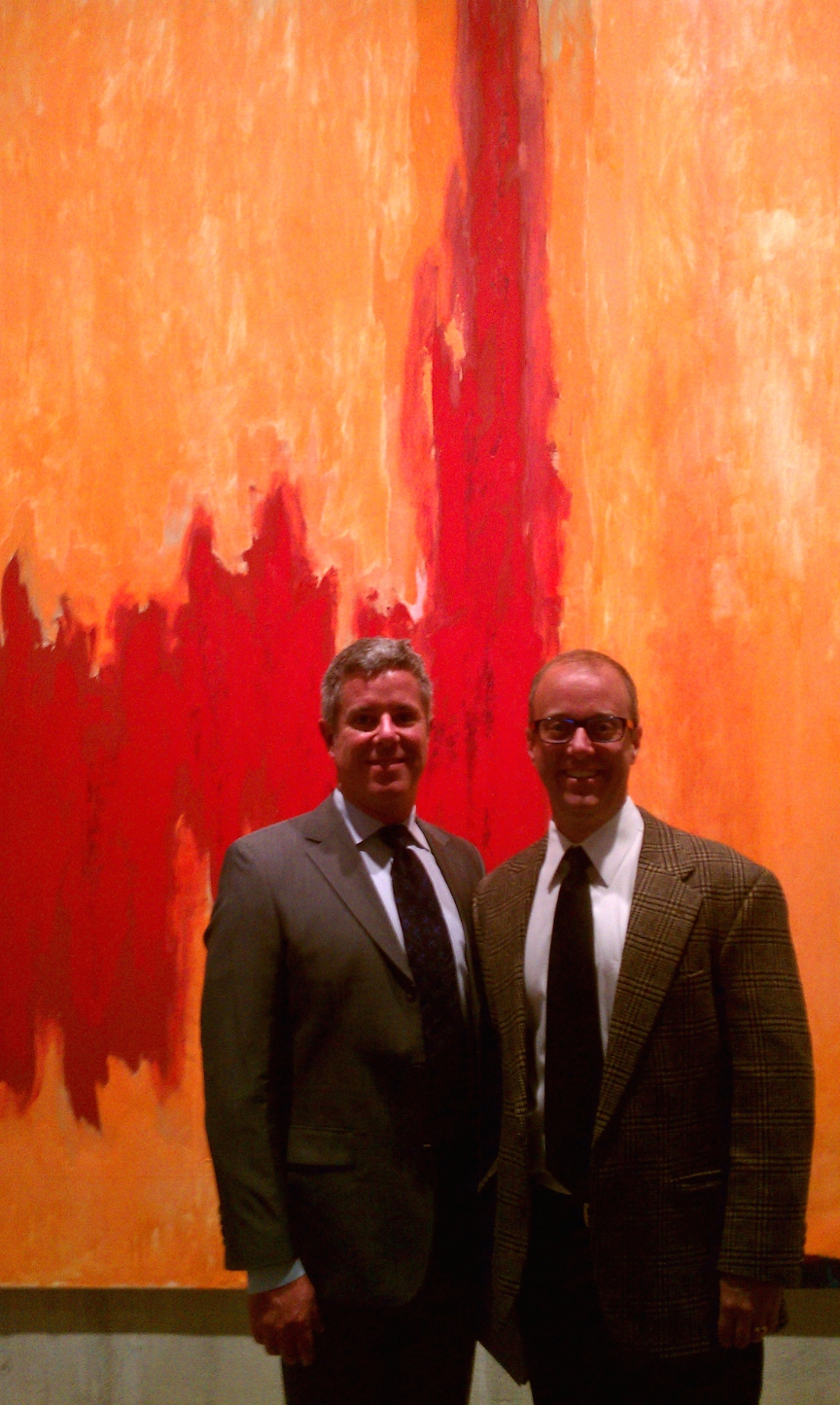
At the Clyfford Still Opening

Use your Museum Membership

Even if you have have just a little bit of time to spare, go ahead and use your membership(s). Visiting a museum doesn’t have to be an all day event – in the past week I visited the Denver Art museum once as part of a work project and then I went back a second time by myself, just to look at 2-3 pieces.

Instead of planning your museum excursions to be ‘do-it-all, see-it-all’ outings, try popping in once in a while and looking at just one exhibit or even just a room.

I know we all run around from place to place and meeting to meeting with less and less time to ourselves. Allow the museums to offer you a break, a moment to pause and enjoy.

David Schnell 'Aussicht', 2005 at Denver Art Museum

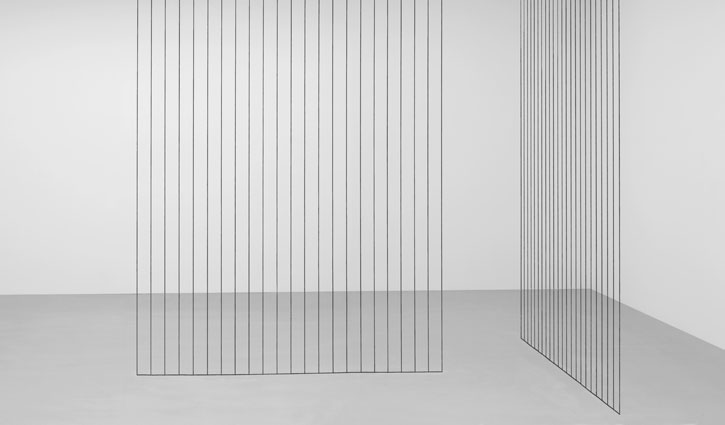
Fred Sandback at MCA Denver

“In every block of marble I see a statue as plain as though it stood before me, shaped and perfect in attitude and action. I have only to hew away the rough walls that imprison the lovely apparition to reveal it to the other eyes as mine see it.” Michelangelo

The Sandback show at MCA Denver is terrific!

His installations of thread barely create structure but capture the “apparitions” of monumental planes and forms throughout the space.  The pieces slice through the rooms, highlighting the building itself and then go on to challenge the viewers’ perceptions by redefining – breaking away from the physical walls and illustrating planes of nothingness that exist concurrently.

When I first saw the show, I thought it seemed solemn and a bit serious – it’s so structured, so minimal and so devoid of color.  If you felt this way, then I would definitely encourage you to see it again. It is uplifting and hopeful: the optimistic gestures allow the viewer to see the museum as constructed and then offer a glimpse of what could be…of something more. It makes me happy.

About ArtLook

I see a lot of art…more than most. In the past 10 years, I have seen roughly 1000 museum exhibitions and 2500 gallery exhibitions all over the world; that coupled with books, magazines, websites, television, restaurants, offices, and homes…well, it adds up to a LOT of artwork.

I enjoy looking at artwork on my own – I like to take my own time to experience and react to it without someone else telling me what I should think about the art.  Even so, I find it so helpful to seek out knowledge, opinions and insights of others.

This past year I made the effort to visit with about 100 artists – going to their studios, their homes, meeting them for coffee, and seeing them at their shows. These artists are almost always willing to take the time out to talk about their work and explain the ideas and processes that go into producing their art.

When I go gallery hopping, I like to look around at my own pace without the feeling that a salesperson is hovering over my shoulder – it just seems like pressure and takes my focus away from interacting with the art.  However, I do like to understand what the art is all about so once I have taken some time to see the work for myself, I engage gallerists to tell me about what I am seeing. I usually want to know about the current body of work, about how the pieces relate to other works by the artist and about why the gallerist feels like it matters. Gallerists & dealers are willing advocates for the artworks they show and the artists they represent.

When I go to museums, I read the literature – the curators take pride in revealing the ideas behind the shows they present. Usually, volunteers are around and willing to discuss the works on show, and frequently guided tours are available.  Discussions by artists, curators, collectors and critics are often listed in the programs. When I know that I am going to see a show, I will ask other people about their thoughts on it and if I have the opportunity to revisit it, I find someone with interest in the show to join me so I can get their reactions to the art and hopefully learn from their observations.

I like to believe that the response to art is my own, but understanding the artist’s objectives and how it is received by others, their observations about techniques, inspirations, historial references and influences all give me clues with which I form my opnions.

I was recently in at a discussion with a group of artists and Ben Rasmussen was showing his photos from around the world – some beautiful images of rather remote locations and of totally unfamiliar customs. I remarked that I feel like I have a “tourist’s eye of the world” – I travel and I see a lot, but to be honest I’m like most and really only get the tourist view.

It’s the same with art: I do see an awful lot of art – most of it on my own, but I usually get only a superficial glance. I get the most out of it when I take the time to engage others in a shared experience.