Three Museums in Cincinnati

Sunday I explored 3 museums in Cincinnati:

The Cincinnati Art Museum – is a wonderful collection of art, on par with state art museums around the country. It does a terrific job of bringing art to the city (it’s actually one of the oldest in the country) – like many art museums using a sort of checklist  approach to showing work: a cycladic statue, check; an Egyptian sarcophogus, check; a Monet, check; a Picasso, check; a Rodin, a Calder, a Roman this, a Greek that – check, check, check & check.

It does what it sets out to do and so I find no fault – I do especially like that it places emphasis on the rich history of art from the region with it’s Cincinnati Wing. This addition, opened in 2003 and includes the “Cincinnati Painters” and also Rookwood pottery, along with glass, metalworks and furniture.  There are beautiful examples of work by John H. Twachtman, Joseph H. Sharp, Frank Duveneck, and Henry Farny and many others – Cincinnati was one of the foremost art centers of the late nineteenth and early twentieth centuries.

During this trip, I was happy to get to see a new statue installed this past Spring out front: Jim Dine’s Pinocchio (Emotional) – a 12 foot bronze greeting visitors upon the approach to the museum. His work was also featured prominently in an exhibit, In Celebration of Pinocchio with hometown artists including Jim Dine, Casey Rioden Millard, Mark Fox, Jay Bolotin and Will Hutchinson.

The Taft Museum of Art – This 1820’s house on a hill was donated to the city by the Tafts. Charles Taft and his wife Anna Sinton Taft were brother and sister-in-law to President WIlliam Howard Taft. Their collection of art, bequeathed to the city, includes Eurpoean and American master paintings, Chinese porcelains and European decorative arts – there are works by Rembrandt, Hals, Goya, Gainsborough, Turner, Ingres, Whistler and Sargent.

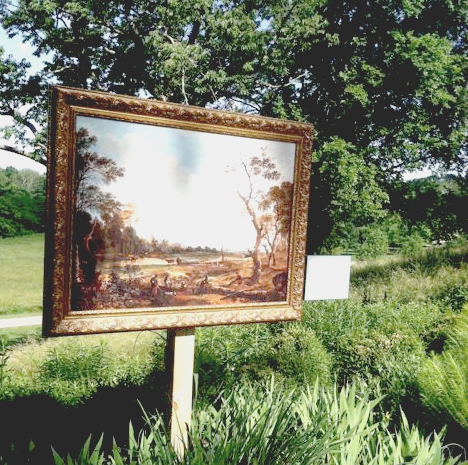
While I was there I enjoyed the collection and also 2 special exhibits. The first was Mathew Albritton’s photography in Ohio to the White House  – a look at the brithplaces and childhood homes of seven presidents.  The second, al look at the collection of French paintings on loan from the Wadsworth Atheneum in the exhibit Old Masters to Impressionists. Additionally, the city was celebrating it’s 80th anniversary of the museum with an exhibit of 80 reproductions from the collection placed throughout the Cincinnati Valley. http://www.taftmuseum.org/?page_id=2031

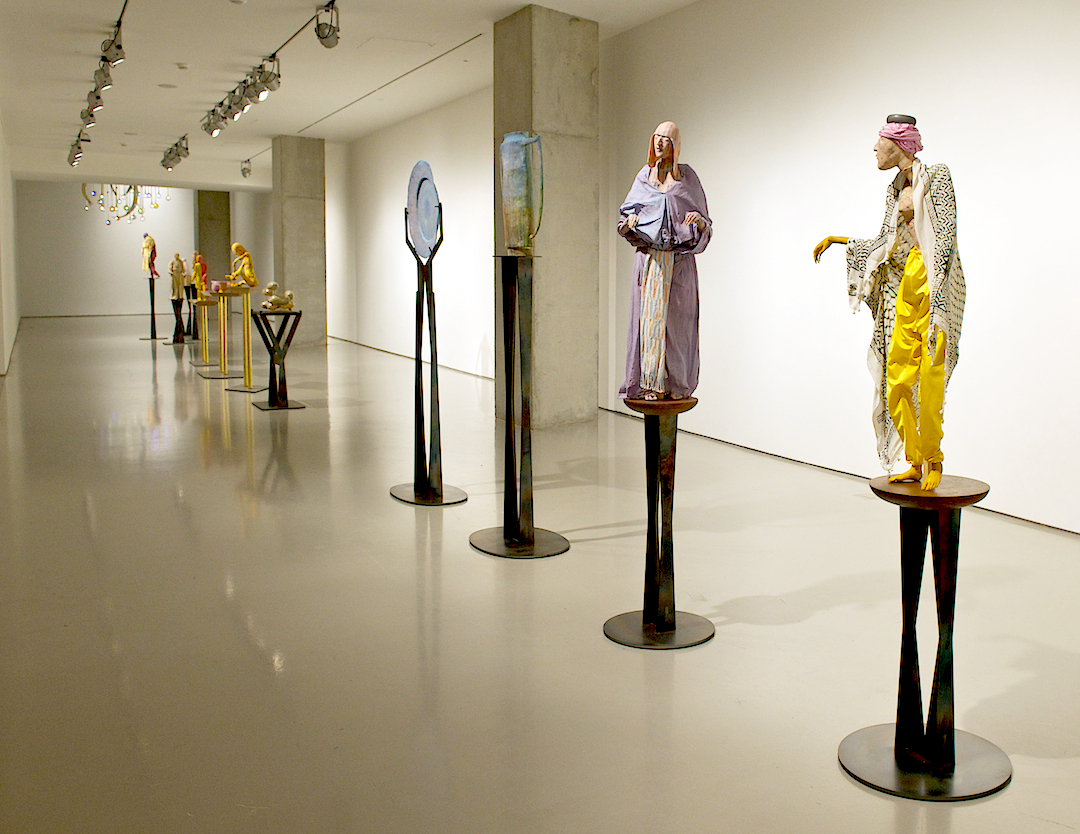
The Contemporary Arts Center – This striking 6-story jig-saw puzzle of a building designed by Zaha Hadid opened in 2003. It is a non-collecting museum dedicated to presenting contemporary ideas from around the world. – this time around I saw Jannis Varelas’ Sleep My Little Sheep Sleep, Francis Upritchard’s A Long Wait, and Spectacle: The Music Video.

Art for All, Taft Museum
Taft Museum

The Captive, by Henry F Farny 1885 at Cincinnati Art Museum

Boston July 2012

Earlier this month we took a week and a half to go to Boston and then up the coast of Maine. We got to visit dear friends in both areas and we got to unwind while checking out New England.

In Boston, we did our normal walkathon tour of the city, winding our way up the Harborwalk , heading into the North End, wrapping around to Beacon Hill, Back Bay over to the South End and back by Tufts and into Downtown. We went jogging through Boston Common and shopping over on Newbury Street. While we never miss Faneuil Hall or Mike’s Pastry Shop over on Hanover Street, this time we also made the effort to branch out and we were glad we did. We enjoyed our meals down on newly-trendy Tremont Street and in Chinatown and we tried out the food trucks on the Rose Kennedy Greenway.

On our fifth day we headed up the coast of Maine toward Portland and stayed the rest of the week with friends in Yarmouth. We slowed our pace way down – we hiked a little and checked out a nearby beach, one evening we took a water taxi to one of the islands for dinner. We took a drive up to Christmas Cove, and spent a little time shopping in Freeport. We drank wine and gorged ourselves on lobster … actually having lobster for breakfast, lunch and dinner!  Most of the time we simply sat out on the veranda and enjoyed letting ourselves do nothing.

I couldn’t help myself – I tried, but I just couldn’t. We managed to skip the art galleries altogether (I looked longingly into a few windows), but still wound up visiting three art museums in Boston: The Museum of Fine Arts, The Isabella Gardner and the Institute of Contemporary Art.  We were impressed with the new architecture at each of the museums and we enjoyed the exhibits – two of my favorites:

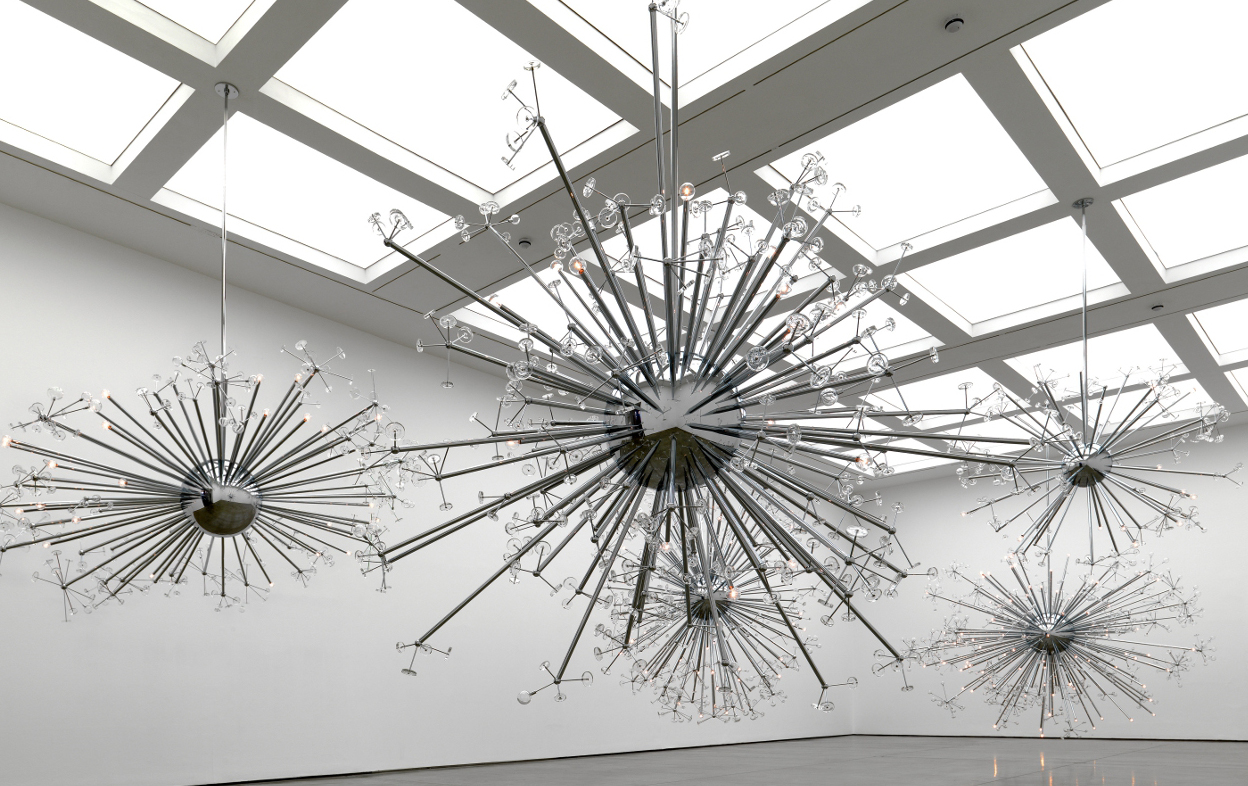
Josiah McElheny’s exhibit at the ICA, Some Pictures of the Infinite, takes a conceptual look at time and space continuums.   McElheny is the kind of artist that makes me wish I was smarter – each display challenged me  to try to grasp a concept of infinity that, by definition, is unattainable.  His blown-glass works break down barriers between craft and art – the mirrored spirals of suspended orbs combine scientific theories of the cosmos with iconic mid-century modernism.

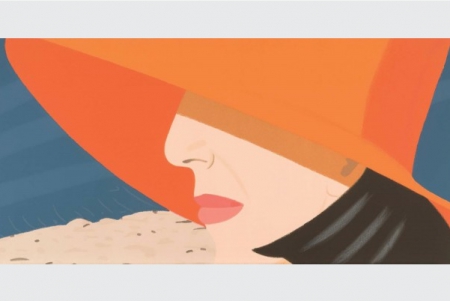
At the MFA, the highlight was Alex Katz Prints – the show includes 125 pieces on display that together emphasize Katz’s artistic clarity of voice over the past 60 years.  He creates arresting images using as few elements and details as possible. He reduces form and color to produce images of graphic quality that are immediately recognizable and the subjects – his beloved Ada, his family & friends and the Maine landscape retell his story of a life well-lived.

Orange Hat by Alex Katz

Endlessly Repeating detail by Josiah McElheny

Top 10 in DC – May 2012

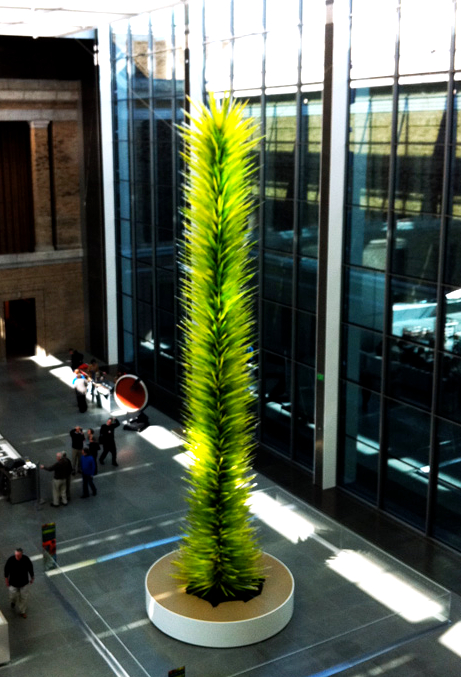
I passed through DC on my way home from vacation this week  – it was an opportunity to connect with a couple clients, do some research on a series of prints I’d like to make (my own work) and also to touch base with a few artists. While I was there I went to 4 museums and about a dozen galleries. As always, I found a broad spectrum of things to interest me – ranging from the gallery of Whistlers and The Peacock Room at the Freer to Jay Musler’s incredible feathery glass art at Maurine Littleton’s Gallery to Mark Morgan’s quirky sculptures made of discarded detergent bottles at Arts @ 1830.

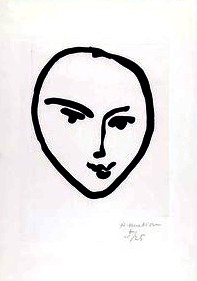
For me, the two most exciting shows this time around were the Miró exhibit over at the National Gallery and then a small exhibit of privately-owned Matisse & Picasso prints and drawings at Neptune Fine Art in Georgetown.

Now, if you haven’t seen the show over at Neptune, I am sorry to say it is coming down – Christine Neptune shares the space with her husband, Robert Brown. He will be up next, celebrating his own gallery’s 30-year success with works from his stable of artists’ – including the likes of Mel Bochner, David Nash, William Kentridge and Oleg Kudryashov.

Okay, so I am getting ahead of myself – the Matisse and Picassos…what a treat! The show consisted of about 3 dozen prints and drawings that belong to two different collectors – they are all in beautiful condition. My favorites were the obvious Nadia portrait and then two tiny little Picassos, rare little prints that were from editions of only 10 and 14, respectively.

I really wasn’t expecting to happen upon the gallery at all; I was headed next door  to see another show when I noticed the gallery. The townhouse is like so many in Georgetown, a nest of intimate rooms that stand above a rear courtyard..perfect for showing off master prints and illustrating how potential buyers might actually live with revered works. Coincidentally, a dealer I had met with not an hour earlier had recommended this gallery to me so I figured, “why not?” I am so glad I checked it out and will keep it in mind as a “must see” in the future.

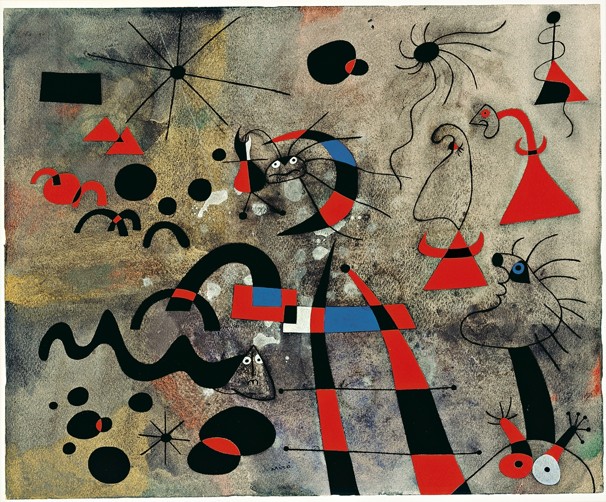
The Miró exhibit  over at the National Gallery is blockbuster. The show consists of more than 150 works, covering a period of 6 decades. I personally love this type of show –   it is constructed to lead the viewer through the life of the artist,  showing the progression of works in the context of what was going on around the artist.

“The Ladder of Escape” highlights Miró’s loyalty to Catalonia throughout a lifetime of hardship: two world wars, the Spanish Civil War, and during Franco’s dictatorship. His story winds its way from farmlife of the 1920’s through periods of politically-charged explorations in surrealism ultimately to the self-referential symbols that together make the vocabulary for his fantastical, poetic later paintings.

I am enamored with the constellation of works – each one a puzzle, revealing itself slowly, taking the effort of the viewer’s attention to decipher.

My Top 10 this time around:

  1. Joan Miró at National Gallery
  2. Matisse & Picasso at Neptune Fine Art
  3. Peacock Room at the Freer
  4. Colby Caldwell at Hemphill
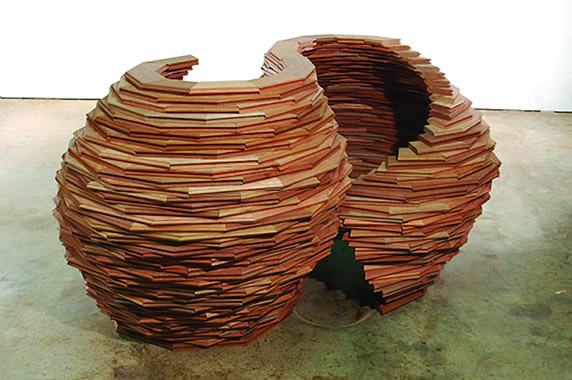
  5. Foon Sham at Project4
  6. Ai Weiwei’s Fragments and Hokusai: 36 Views of Mount Fuji at Sackler Gallery
  7. Renate Aller at Adamson Gallery
  8. Julia Fernandez-Pol at Morton Fine Art
  9. Jackie Battenfield at Addison Ripley
  10. K Silve at Susan Calloway Fine Art
  11. Getting to go visit Gail Vollrath and Brian Petro in their studios.

Foon Sham – Spiral Vessel

Colby Caldwell – How to Survive Your Own Death

Jay Musler – Blue State Bowl at Maurine Littleton

Joan Miro – The Ladder of Escape

Picasso – Toute la Vie (1960)

Julia Fernandez-Pol

Nancy Lovendahl’s Sculpture

I guess I first took notice of Nancy’s work about a dozen years ago – I frequently ride my bike up and down the Cherry Creek and the Platte River trails and I saw her series of sculptures over near Coors Field, on the west side of the Flour Mill Lofts. “Elements” are actually four circular outcroppings of sandstone and granite that provide a contemplative resting place on the northern end of Riverfront Park; the indigenous stones rest in sympathetic poses on the river’s landscape contrasting the urban backdrop of the evolving city around them.

A few years later, I saw her work again at the Sandy Carson Gallery – she was exhibiting alongside another favorite artist of mine, Lorelei Schott. Nancy had egg sculptures made of stone, ceramics, wire & wood, a series that has gone on to be shown around the world.

Since then, I have seen her work around town, in publications and online.

Recently I ran into her over at Madeleine Dodge’s studio and she invited me to come down to Sedalia and check out her latest work, “The Gathering.”

WOW! What a treat!

It’s a monumental sculpture, carved out of 300,000 pounds of limestone…the sculpture is made up of 18 pieces and is 38′ long, 30′ wide and 8′ high. The sculpture is destined to be placed on private land near the Ohio Creek Valley, an interactive display of oversized stones strewn on the stream’s edge.  Emerging from landscaped grounds, “The Gathering” will resemble bones exposed from the earth’s manicured surface.

Nancy’s new work (two years in the making) reveals a record of mythical bison – giants that spark the imagination. The ‘bones’ will provide seating and shade in the clearing near the creek. It will be a shocking discovery to the uninitiated that will beg the question “who was here before us?”

Check out her website, www.nancylovendahl.com to learn more about this project, her other works and her storied career as an artist.

Nancy Lovendahl The Gathering

Nancy Lovendahl The Gathering

Nancy Lovendahl – The Elements

Nancy Lovendahl

Link

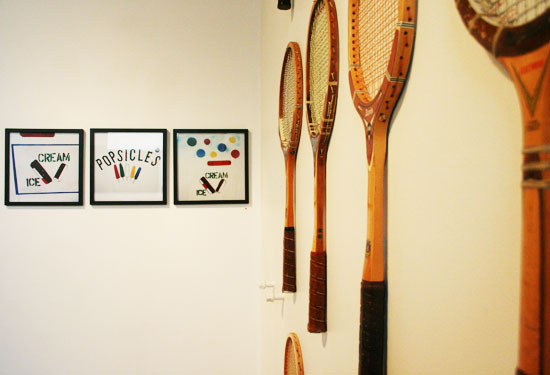
Geographic Wave, National Geographic magazines, binder clips, push pins, dimensions variable, 2009-2011. IMage: Courtesy of Hong Seon Jang and David B. Smith.

Springtime in Washington

It almost goes without saying, but my favorite show in DC right now is Doug Aitken’s projected video on the outside of the Hirshhorn Museum & Scultpure Garden. “SONG 1” uses powerful video projectors to cast the video around the entire museum and allows visitors to see the first-ever work of 360-degree convex-screen cinema. I got to see it on a warm starry night but have a feeling I would have like it in the rain or even in snow – it really is wonderful. If you are in Washington before May 13th, make sure you spend half an hour to check it out one evening.

The rest of the trip also had a lot of great art – here are my top 10:

  1. Doug Aitken “SONG 1” at the Hirshhorn Museum & Scultpure Garden
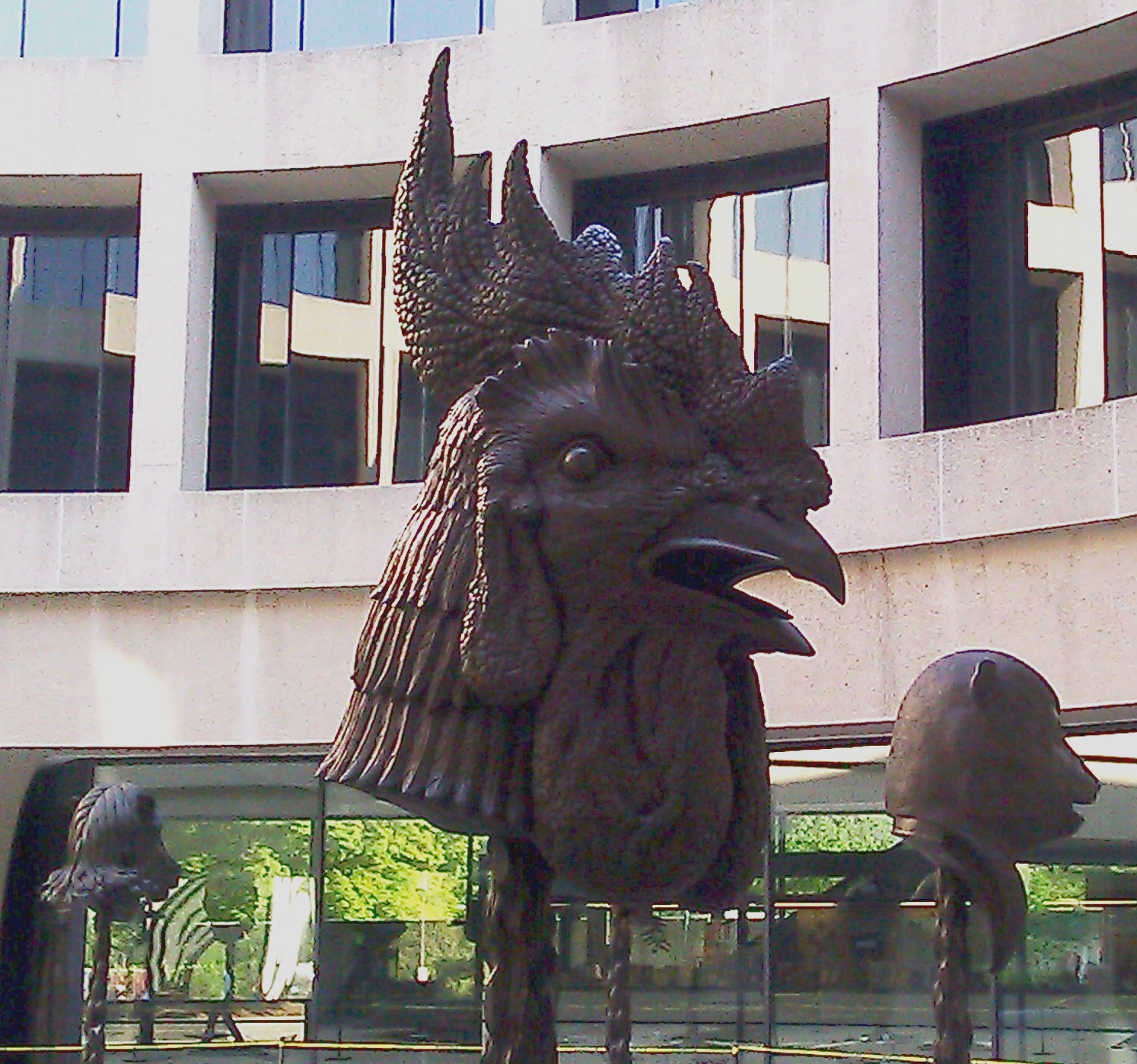
  2. “Circle of Animals Zodiac Heads” by Ai Weiwei at the Hirshhorn Museum & Scultpure Garden
  3. “Snapshot: Painters and Photography, Bonnard to Vuillard” at the Phillips Collection
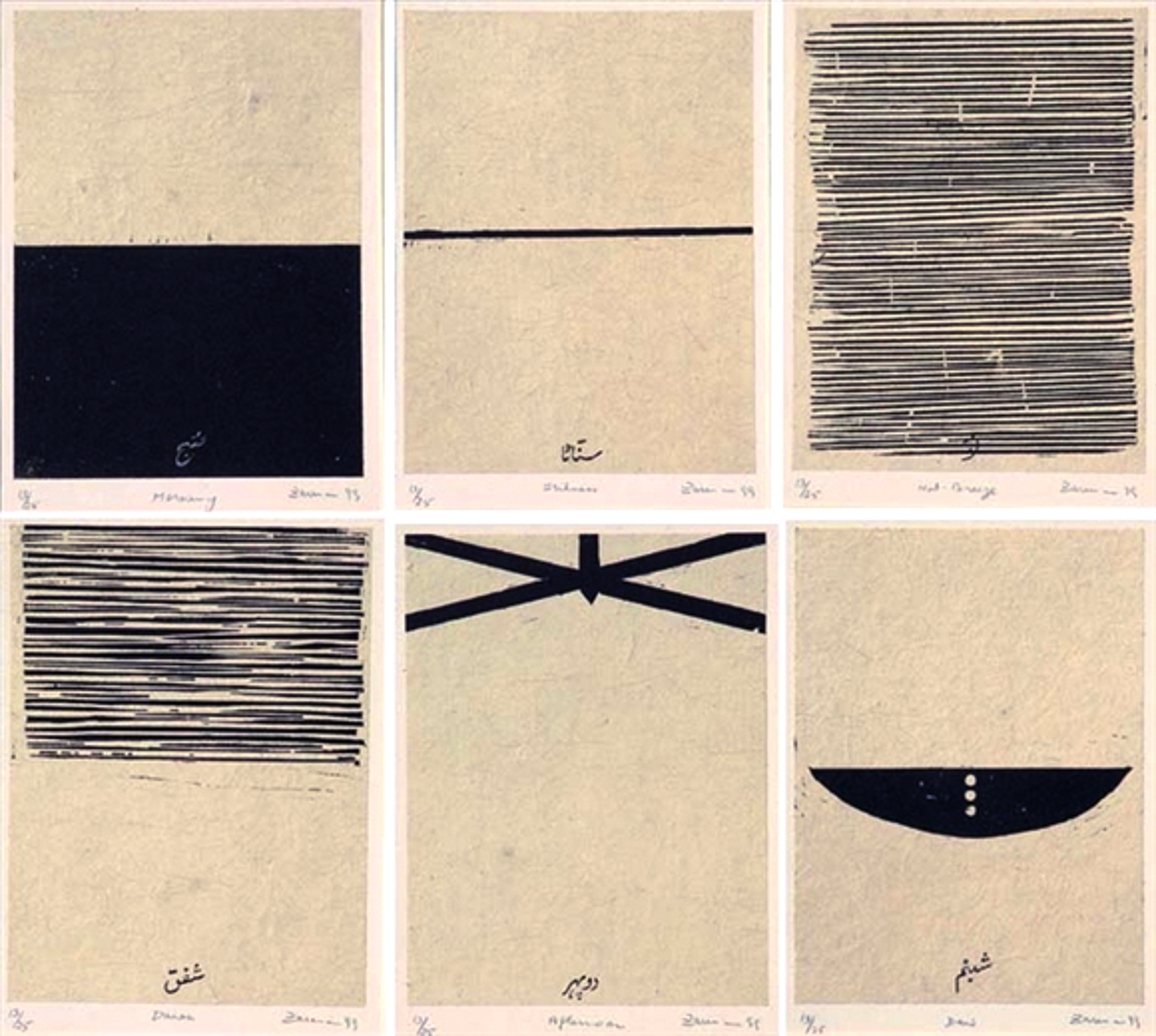
  4. “Home is a Foreign Place”, a suite of 6 of the woodcuts by Zarina Hashmi at Burton Marinkovich
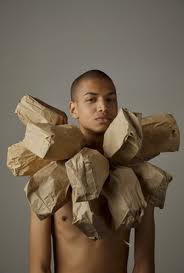
  5. “Domestic Exchange” by Wilmer Wilson IV at Conner Contemporary
  6. “Suprasensorial” at the Hirshhorn Museum & Scultpure Garden
  7. In Vibrant Color: Vintage Celebrity Portraits from the Harry Warnecke Studio at the National Portrait Gallery
  8. The Black List: Photographs by Timothy Greenfield-Sanders at the National Portrait Gallery 
  9. Paintings by Kathy Beynette at Gallery Plan B
  10. “Pilgrimage” by Annie Leibovitz at Smithsonian American Art Museum

My Top 10 in Miami (January 2012)

Can the city’s galleries become anchors to an art scene that draws attention throughout the year? The city has truly developed into one of the great cosmopolitan cities, but the international, art-buying, jet-setters know when to be there.  I guess I am wondering if the gallery scene will rise to the level of the fairs it hosts – can it? How do galleries even produce shows for the rest of the year.

A couple of months ago my partner & I headed down to Miami and I took a couple days to check out some of the art scene. I love to feel the energy that drives a growing art scene – but this time I left feeling a little empty. Maybe it was just me… I mean there are more galleries, right? The scene must be growing, but it kind of seems like a lot of what I found was specifically designed to attract the international art-fair developers.

Kawaii Universe? An entire warehouse of rainbow-colored stickers of cupcakes and sushi?

Walls on Wynwood? A couple years ago I took so many photos of the walls painted throughout the city – I was all over it . This time, I was just over it – it seemed so calculated and event-driven, lacking heart and spontanaeity.

A lot of the work I saw seemed to be screaming “Pick Me! Pick Me!” It is kind of like a pageant – if the work can be loud enough and colorful enough, maybe it will get noticed when the fairs come to town.  I guess it’s not a bad marketing strategy and if I lived there, I would probably do the same thing. It’s just that the thoughtfully curated, well-developed shows were few and far between. Even some of my favorite spaces seemed to fall short with exhibits lacking programmatic coherence.

With all of that said, there is still a lot to look at and I know I only got to see a little bit – my top 10:

  1. Robert Fischer’s “Quarry” at Charest-Weinberg
  2. Romulo Aguerre “The Forms of Light” at Sammer Gallery
  3. Richard Höglund, “Hysterical.Sublime..” at Gallery Diet
  4. Karina PeisaJovich, “The eyes, sometimes” at Alejandra von Hartz Gallery
  5. Nick Gentry & Josafat Miranda at Robert Fontaine Gallery
  6. Roman Vitali, “It Also Snows Inside” at now contemporary art
  7. JeanPaul Mollozzi at Bakehouse Art Complex
  8. Victor Sydorenko, ” The Levitation Series” at Black Square Gallery
  9. Mira Lehr “209 Ignition” at Kelley Roy Gallery
  10. Consuelo Castañeda, “Homage to Gego” at Hardcore Art Contemporary Space

Another Way to Go: 6 artists, 12 directions

I am really interested in the ideas of artistic voice, identity and recognition.

Over the summer I had a number of artists approach me with questions about their portfolios, marketing and pricing, etc. In looking at some of these I saw so many artists that were kind of all over the map with regard to style and technique – you know, the kind where each and every artwork looked like it might have been the work of a different person.

I advised them to pick something and stick with it for a while so they could really become a master at something and not be just okay at a lot of different things. I wanted them to tap into that part of themselves that really defines them – to find their voice.  I believe that mature successful artists are keenly aware of their voice. Not to say that artists don’t explore different things – ideas get resolved in different media, subject matter changes, etc. As a collector and a consultant, what I want to be able to see is, that as the works change, I can still tell it is the work of one artist and not some other artist entirely.

This past year, I was invited to curate a show this month at VERTIGO Art Space in Denver (Jan4-February11; www.vertigoartspace.com)  and so I used this line of thinking as the starting point for the show and – wow! I quickly realized what a hot button topic this is…almost everyone has something to say about it.  A lot of artists feel basically the same way. Others think I am looking at it from a business point-of-view and that I didn’t get art at all.  I think some were offended that I would point out consistencies in their work because there is such a drive to be original and fresh and authentic.

Some gallerists told me that they value creativity over commercialism – others pointed to the realities of business, that for a gallery to stay in business, eventually something has to sell and customers’ expectations often drive that process.  Artists told me the art they were showing in the galleries wasn’t what they really wanted to be working on- that they want to try something new but that the gallery wouldn’t go for it. Critics were calling artists “Johnny One Note” because they had been there – done that – seen it before. One artist selected for this show told me that as soon as the “recognized” series changed in favor of something else, the collectors, critics & galleries stopped even looking at the work.

I looked at my own work – as an artist, I am almost always associated with the burnout vellum pieces, but then I go off and explore other tangents like the series of 3000 photographs of sidewalks or the watercolors or the monochromatic eggshell compositions.

As I continued with the exploration for this show, I really began looking at the various tangents or diversions that many artists take.

Over the holidays my partner & I had a party and there wound up being a great mix of people, some artists, some gallerists, some of his running buddies, mutual friends, neighbors, a little family.  That night one our longtime friends came over to me and commented on my burnout vellum pieces – “You know I appreciate and I get where you are going with them, but when are you going to go back to those colorful paintings you did 10-15 years ago?” Later that same night, another friend came to me and wanted to know about some new etchings I had done, “You know I appreciate them and I like the use of color, but when are you going back to the monochromatic burnout pieces?”

I’m now more interested in the issues around the idea of having that identifiable, sellable body of work … the advantages this affords an artist and the potential challenges of restricting creative exploration. There is a balance between the exposure and commercial success that recognition provides and the harness restricting creative exploration.

The 6 artists that I included in the show present 2 pieces – one that would be from their recognizable body of work and then another that is unrelated and not immediately identified as belonging to the same artist.

Tyler Aiello, Courtesy of Space Gallery, Photo by Westword.

Eric Michael Corrigan, Courtesy of Walker Fine Art, Photo by Westword.

Lorelei Schott, Courtesy of Sandra Phillips Gallery, Photo by Westword

Jimmy Sellars, Courtesy of Sellars Preject Space
Phil Bender, Courtesy of Pirate : Contemporary Art,
Photo by Westword

Sangeeta Reddy, Courtesy of William Havu Gallery

Phil Bender, Courtesy of Pirate: Cotemporary Art

Sangeeta Reddy, Courtesy of William Havu Gallery

Lorelei Schott, Courtesy of Sandra Phillips Gallery

Andy Warhol’s Shadows at the Hirshhorn

I don’t know about you, but I guess size matters. When I see a big painting, I typically wind up spending more time trying to take it all in. I guess there is some unwritten equation size=profundity.

However, when I took in the current exhibition of Andy Warhol’s shadows, any ideas that I should pour over each nuance of color or textural drip were immediately dispelled.  The piece is comprised of 102 panels and stretches nearly 450 feet around the second floor of the circular museum.

Indeed rather than take my time, I found myself wanting to go faster and faster – I would have run if the security guards would have let me. I felt like I was caught inside an Eadweard Muybridge zoetrope – not certain if I was the viewer or the subject.

I have a feeling this is appropriate – Warhol himself said it isn’t art, but rather disco decor. The paintings are of no discernible objects – speculation running from architecture, to cardboard maquettes to erect penises. The big bold colors are applied with floor mops in crude bravura strokes. Sure, it gives reference in terms of color and context – alluding to the AbEx painters and minimalists, to Duchamp’s questioning of iconography and Man Ray’s experiments from the 1920’s.

For me, ultimately it is just fun…it’s thoroughly exhuberant and fleeting – lasting as long as it takes to run through it.

The show goes to mid-January, so check it out if you can.

Warhol Shadows at the Hirshhorn Musesum

My Picks for Portland

This past week, I had a great trip to Portland, OR. It was only my second time visiting the City of Roses, but I have to say that I really like it.  It has a cool urban vibe and offers city living in a truly gorgeous setting alongside the Willamette River with the mountains in the distance. There is definitely a coffee culture – and that is fine by me; I tried several, with my favorites being Barista in the Pearl District and also NW Coffee over in Goose Hollow. The food was great –  beginning with a delicious pastrami sandwich at Kenny & Zuke’s and ending with northern Italian at Nel Centro (oh, and a stop by St. Cupcake…yum!)

The city has a convenient free shuttle that runs in the heart of the city. I typically like to get a sense of a place by going through it block by block so, as is normal for me, I walked and walked and walked – into different neighborhoods, up into Washington Park (overlooking the city) and through the downtown districts.

Portland has an growing artist community and a number of galleries that devote themselves to promoting local and regional artists and a few that showcase national and international talents. At the Portland Art Museum, I enjoyed revisiting the contemporary collections. They had a really beautifully curated exhibit on Japanese prints – it led visitors through 3 centuries of printmaking and placed the art trends in the context of societal evolution.

As for the galleries, I visited about 15 and found them to run the gamut from co-ops to commercial – some conceptual, some great and others, not so much.  I generally find the gallerists to be very friendly and approachable, willing to talk about the artists, the shows and the galleries.   Below I list my favorites:

    • Lee Kelly @ Elizabeth Leach
    • Jim Riswold @ Augen Gallery
    • Roll Hardy @ Laura Russo Gallery
    • Fritz Liedtke @Blue Sky
    • Ellen George @ PDX
    • Jack Davidson @ Pulliam
    • James Boulton @ Pulliam

Jim Riswold – Don’t Shoot We’re Camels

    James-Boulton – Orionid #1

    Lee Kelly @ Elizabeth Leach