American Museum of Western Art

I often write about the art I see during my travels, but the reality is there is a lot to see right here in Denver.  A couple months ago I went with an art historian to The American Museum of Western Art. It was a treat and really a must see in Denver’s growing art scene.

The museum is the showcase of the Anschutz Collection, arguably the best private collection of western art in the world.  It packs, salon style, as many pieces as it possibly can into the 4-story Italianate building from the 19th century (The building itself is worth checking out and has a storied past – read http://www.westword.com/2012-05-31/culture/museum-of-the-american-west-anschutz-collection/  for more information.) There are more than 600 pieces covering works spanning 150 years of artists’ engagement with the West.

The museum is generally planned according to movements and schools of art and while not exactly in chronological order moving from the oldest works on the lower level and up to the most recent on the upper levels.  It is useful to think about these schools and movements and you progress through the museum – there is so much to look at, it helps to organize the experience and see the works in relation to what other artists were up to at any given time.  Docents typically lead you through the floors, but I am told visitors are free to wander.

The main groupings of works include:

The Expeditionary Artists (George Catlin, Seth Eastman, Alfred Jacob Miller, John Mix Stanley); these guys generally went along on expeditions and scouting adventures to record journeys though the west. Their paintings often showcase the interactions with various tribes and depict trappers as they developed the fur trade.

Hudson River and Rocky Mountain Schools ( Albert Bierstadt, Thomas Moran, Worthington Whittredge); these painters typically lived in New York City  and often are most known for their paintings of the Hudson River Valley and later, the Rocky Mountains. These landscapes are filled with light and convey a sense of splendor.

Narrative Artists (George DeForest, William De Leftwich Dodge);these guys were the basic story tellers and depicted what was actually happening as settlers took hold in the west.  They took inspiration from the Renaissance, focusing on playwrights and writers, and poets while telling stories of battles and the gold rush.

California Painters  (Charles Christian Nahl, George Henry Burgess, A.D.O. Browere); these guys came for the gold but went on to showcase early California, often celebrating its Spanish heritage.

Interpreters of the Old West (Frederic Remington, Charles M. Russell, Charles Schreyvogel); even as the West was quickly developing into a major hub of urbanization, the public embraced their depictions of heroic frontiersmen and the idealized landscapes that filled the pages of papers, magazines and dime-store novels.

Illustrators (NC Wyeth, Dean Cornwell, Herbert Dunton); these artists of the early 20th century were the favored illustrators for short stories, novels and magazines.  Because of the publications, theirs are the iconic images most recognized.

Taos and Santa Fe Schools (Ernest M. Hennings, Ernest Blumenschein, Walter Ufer); these guys were educated artists in search of subject matter. As they travelled west, they basically landed in northern New Mexico and stayed. They developed a style of Southwestern art that is immediately recognizable.

American Regionalist Painters (Thomas Hart Benton, John Stewart Curry) These guys painted America’s heartland in a pseudo-realistic style that gave emphasis to everyday life of small towns and farmlands.

New Deal Artists (Maynard Dixon, Victor Higgins, Frank Mechau,) In the 1930’s Federal programs including the Works Progress Administration and the Section of Painting and Sculpture employed artists to commission paintings for post offices, state capitols, and government buildings. Many of these paintings were murals that depicted the strength and resourcefulness of Americans and the bounty of the landscape.

Expressionists (Marsden Hartley, Birger Sandzén); these artists were modernists, they conveyed emotion through manipulations of color, surface, and form.

Cubism and Abstraction (John Marin, Georgia O’Keefe); it is at this point in the tour of the museum that I really began to notice how quickly styles of art were changing, not only in the West, but around the world. The museum speeds through different modernist styles.

The size of the museum belies the collection – it really is so extensive that you can go back to again and again and continue to see different things and learn more about the development of art of the West and how it relates to the history of our country. (http://www.anschutzcollection.org/)

The-Silenced-War-Whoop - Charles Schreyvogel

The-Silenced-War-Whoop – Charles Schreyvogel

The-Last-Race-Mandan-O-kee-pa-Ceremony George Catlin

The-Last-Race-Mandan-O-kee-pa-Ceremony George Catlin

Death of Minnehaha - William de Leftwich Dodge

Death of Minnehaha – William de Leftwich Dodge
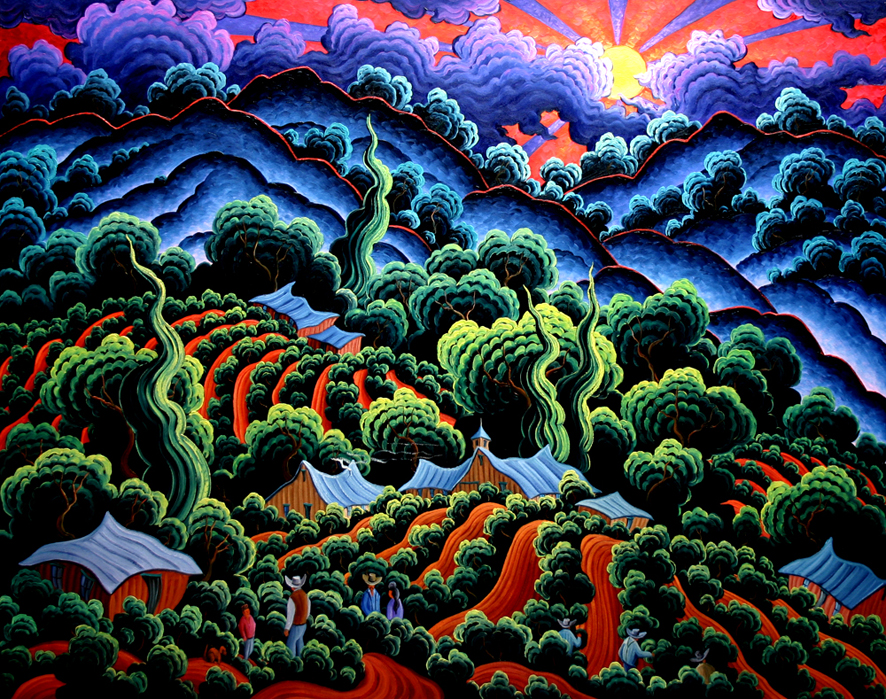
Sunrise In The Vineyard Kim Douglas Wiggins

Sunrise In The Vineyard Kim Douglas Wiggins

Consider Building an Art Collection

I like to go on home & garden tours to get inspiration and to see how my place measures up, and to see art (of course, since it’s what I do). There are the decorated homes – the ones where the artwork just matches each room so perfectly, the size and colors. Those certainly are beautiful homes. Some of the homes have an eclectic vibe which I guess I relate to because that is most often how I describe my own home. Then there are the homes where the owners have so much stuff: posters, paintings, photographs, odd farm-equipment sculptures, wind chimes, glass-eyed porcelain dolls in the guestroom, bric-a-brac.

Every once in a while, a home just makes so much sense – those are the ones where there is such obvious thought behind every decision. The artwork seems to take on a different purpose – each choice is made in the context of the others. Whether the homes have American folk art, impressionist paintings or black & white photography, those are the tours I really love.

The art collections that get me going are really focused; I love the idea that someone develops a set of ground rules and then uses those parameters to actually choose their art. If you want to take a more deliberate approach to getting artwork – try to at least consider it in terms of how it might work in your “collection”.  Most of us wind up finding something we like here and something we like there and then just kind of throw it all together, wondering why it doesn’t necessarily work. The result is that trove of abandoned treasures under the beds, in the closets, basements, attics, or out in the garage.
Of course, you could hire a consultant like me – but even if you don’t, give your choices some thought.  Whether you just discuss your ideas with someone or you chart it out or put it into a spreadsheet, try to establish some guidelines. If you can articulate a framework for the artwork you choose, you can begin to build a collection.

For more information on how I can help you acquire art and/or care for what you already have, see the about tab on my blog.  I’d love to help.

Picture3_edited

Laura Letinsky at the Denver Art Museum

Laura Letinsky: Still Life Photographs, 1997–2012, is on view through March 24, 2013 at the Denver Art Museum.

Laura Letinsky is one of those smart ones – you know the type that makes you wish you had really focused on your homework.

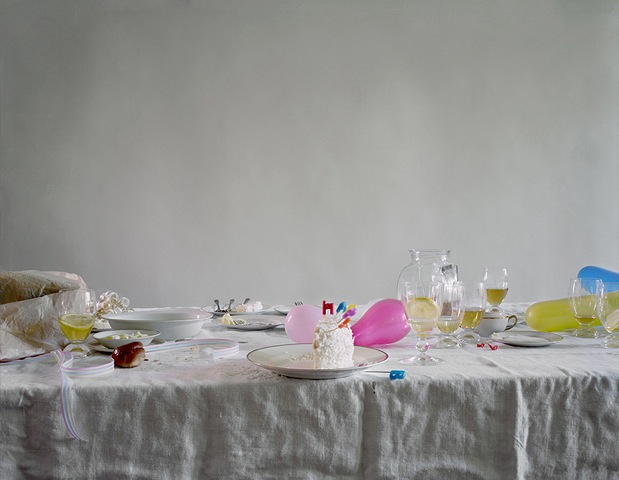
Letinsky is well-versed in art history and it shows; her gorgeous still-life images are immediately accessible to the viewer because of their familiarity. The influence is obvious and yet… there is something more…or less. These aren’t the luscious depictions of the lavishly abundant Dutch tables of the 17th Century. Hers are barely-there pieces of fruit on white linens with white backdrops. There are none of the skulls of the vanitas, and yet there is the melancholic reminder that her stories are of moments passed.

Letinsky is a philosopher. We generally obsess with that fleeting moment of perfection when a peach is at its very juiciest firm-fleshed fullest or a lily is sweetly fragrant. Letinsky’s focus is more on the reality this is the penultimate state of dying. In her photos the fruit has that juicy-sticky quality that makes us want just to clean it up before the flies begin choke on the decay. The perfume is beginning to remind us of the stench of fetid water.

Letinsky is a technician – she uses film and she knows all those things that photographers seem to know about cameras and lenses and lighting. I heard her talk and for all I know, when it came to the technical “stuff” she could have been describing how to build spaceships.

Letinksy is a photographer – Of course she knows that the images engage viewers to connect the dots to history and confront mortality and philosophize about perceived meaning, but above all else she is a photographer. I once asked a painter about some of her recent works – the symbolism or meaning of the recurrent imagery; she laughed and told me “It’s paint on a canvas.” It’s funny because I didn’t quite get it then; I mean, it seemed like an idea I could get behind when looking at Abstract Expressionism, but her paintings were figurative. I do get it now – Letinsky’s work sets it out there: there is decaying fruit, spilt wine, paper cups and wrappers; but ultimately they are photographs. She is in the business of taking light and color and composition and capturing that with her camera in a way that allows her to share her “paint on a canvas.”

"Untitled #54" from the series "Hardly More Than Ever," 2002, by Laura Letinsky. (Photo provided by the Yancey Richardson Gallery)

“Untitled #54” from the series “Hardly More Than Ever,” 2002

ArtLook-Art-Look-Laura-Letinsky

Untitled, #5 2005 To Say It Isn’t So


Untitled #2 from the series "The Dog and the Wolf," 2008

Untitled #2 from the series “The Dog and the Wolf,” 2008

Untitled #1 31x40 from the series "The Dog & The Wolf"

Untitled #1 31×40 from the series “The Dog and the Wolf” 2008

New York, January 2013

We just got back from New York – it was a wonderful week  for us to spend time with close friends and, of course, for me to check out the art.  The highlight was the blockbuster (just closed) Picasso Black & White exhibit at the Guggenheim. After that it was a week-long frenzy of galleries and museums. I raced through The Brooklyn Museum, The Metropolitan Museum of Art,  MoMA, The Museum of Art and Design,The New Museum, the Noguchi Museum, PS1, and The Whitney. I spent a couple of days roaming in and out of doors down in SoHo and Chelsea. I squeezed in a few galleries up on Madison Avenue and Bedford Avenue over in Williamsburg.

The reality is that no matter how I wear myself out, there is no way for me to really do more than take a cursory glance – I got to about 40 galleries this time around, but that is hardly a dent when you consider how much there is to see. As I reflect back on the week, it is already beginning to blur together but here are my top 10:

1) Picasso Black & White at The Guggenheim

This was the big blockbuster show – I love retrospectives in general, but really liked taking in a subset of works that spanned his entire career. Of course, the central atrium of the museum helps – there is such wonderful natural light and the spiral up the circumference allows for viewing from different vantage points. I loved being able to see works like “La Cuisine” close up and then check them out from across the rotunda.

2) George Bellows at The Metropolitan Museum of Art

It was a treat to see this retrospective of arguably one of the greatest  American painters of the early 20th Century – a member of “The Eight,” he was a realist, and often focused his works on the daily realities of urban living. His works captured the essence of NYC as it expanded during the turn of the century.  Many of the paintings were familiar: fighters in boxing rings, prostitutes, the excavation of Penn Station, etc. Ones that I especially liked were taken outside of the city up in Woodstock or off the coast of Maine.

3) Judith Bernstein “Hard” at The New Museum

What can I say? I mean her work just fits so perfectly in the Bowery…I was glad to see the museum showcasing her. I think I’d love to see her confrontational imagery in a more rarified setting; maybe on the Upper East?

4) Mickalene Thomas at Brooklyn Museum

It was fun to see this show which got my head spinning in so many directions. She happened to be checking out her own show the day that I was there and so that somehow added inexplicable relevance. I am beginning to explore concepts of popular imagery put into compositions based in historical reference. That is nothing really new, but right now it is especially hot in the art world.  I was particularly moved by her candid and touching portrayal of the relationship she had with her mother who passed away this past Fall.

5) Noguchi Museum

It takes a while to get yourself out there, but it is totally worth it. If you can manage it on a nice day, combine it with Socrates Park.

6) Daniel Buren at Bortolami

It was funny because when I entered the gallery all of the printed materials by the door were for Jillian Clark (whose installation was on display in the back of the gallery). I immediately looked at the stripes on the wall with recognition, but then questioned myself because of the literature. Once I got past the momentary disconnect, I really enjoyed the show.

7) Seth Casteel “Underwater Dogs” at Dillon Gallery

This guy’s photos are just so fun – it was a great burst of energy to see this show in the middle of a long, cold day of gallery hopping.

8) Yayoi Kusama “Narcissus Garden” at Robert Miller Gallery

These are the same polished steel marbles that the gallery took down to Art Basel; an installation that illustrates the role of context in art.

9) David LaChapelle “Still Life” at Paul Kasmin Gallery

These celebrity portraits force the viewer to look twice; they are broken busts taken from a wax museum.  They are sumptuously colorful photographs that challenge notions of permanence and mortality.

10 ) Henry Moore “Late Large Forms” at Gagosian

I’ve seen a lot of his work through the city in London and in museums everywhere – last year the Denver Botanic Gardens. These large scale pieces make an impact at the gallery – WOW!

Picasso La Cuisine at the Guggenheim

Picasso La Cuisine at the Guggenheim

Noguchi Museum

Noguchi Museum

Mickalene Thomas at Brooklyn Museum

Mickalene Thomas at Brooklyn Museum

Yayoi Kusama Nacissus Garden

Yayoi Kusama Narcissus Garden

Seth Casteel at Dillon Gallery

Seth Casteel at Dillon Gallery

George Bellow Winter Afternoon at the Met

George Bellow Winter Afternoon at the Met

IMG_20130129_104039

The Menil Collection – art in context

It means so much – collection…collection of art; collection of antiquities; collection of museums; collection of philanthropic causes; marks made on the world; lives well-lived. John and Dominique de Menil were key figures responsible for propelling Houston to the top of the list of truly great art cities. They developed the art department at the University of St. Thomas and later the Institute for the Arts at Rice University. They had a long and storied history of support to the Contemporary Arts Museum Houston and the Museum of Fine Arts Houston, to which they brought major exhibitions and gave important works. They engaged architects from around the world to bring the first modernist, international style buildings to the state. They amassed a collection of more than 17,000 pieces of art: paintings, sculptures, decorative objects, prints, drawings, photographs and rare books. The museum campus opened in 1987 with later buildings opening in the 90’s which house the Cy Twombly Gallery, the Dan Flavin Installation at Richmond Hall, the Bysantine Fresco Chapel. The Rothko Chapel (ca. 1971), the Loretto Park with Tony Smith and Mark di Suvero sculptures and the network of offices housed in bungalows and walkways tucked throughout the neighborhood complete the campus.

Last month, we got the chance to spend a nearly perfect day walking around the Menil Collection.

What a suprise! We started at the Rothko Chapel, fully prepared to wait with the crowds that would surely be lined around the block. Instead, we parked at the entrance, we walked though the garden to view Barnett Newman’s “Broken Obelisk” standing in the reflection pool out front and then we walked in.

I must admit I had brief concerns that we might be trespassing – “6 million people in Houston must know that you are not supposed to actually go the Rothko Chapel, right?” After I was convinced that it was open and we should check it out, we did.. and we loved it.

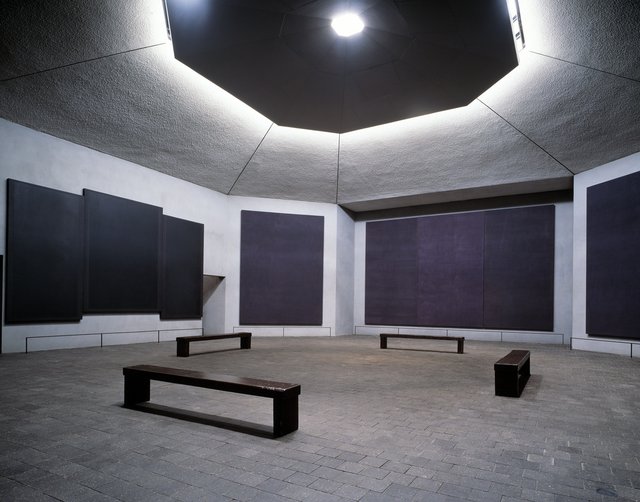
The austere space is an octagonal room constructed of brick and covered in gray stucco and capped with a baffled skylight. It is tranquil – actually , National Geographic Society named it “One of the world’s most peaceful and powerful destinations.” On the walls are 14 site-specific canvases painted by Mark Rothko. At first glance, they look like windows – a series of big blank black canvases. We walked around the room, looking at the canvases from different angles and taking in the effect of each from across the room. Then we moved in closer. We walked up to a canvas until we reached that point at which the painting completely filled our fields of vision. I expected to realize some sort of calming meditative state – you know, staring into an abyss.

What happed was amazing! It was the most unusual experience: the clouds outside passed over the skylight and it was as if the canvas came to life. We had been patient and open to what the works had to offer and, in turn they began to breathe…slowly at first “did you see that?” and then with a steadiness that allowed us to see the colors and strokes and patterns. We saw the purples and reds, the horizontal and vertical lines, compositions on display that had been mostly overlooked. We began to move from canvas to canvas, slowly and then more quickly as the paintings gave us the keys to unlock their treasures.

I have to tell you, I probably could have ended the day at this point and been fully satisfied with our discovery – but that is just not me; I almost always have to keep going. I am compulsive when it comes to looking at art and knowing one of the world’s great collections was just a block away…of course, we checked it out.

We walked through the Montrose neighborhood of modest little bungalows; down tree-lined streets and little gardens and walkways and then Loretto Park with Tony Smith and Jim Love sculptures up to the museum. We crossed over Michael Heizer’s negative spaces, rifts in the lawn and into the main pavillion.

I was delighted to be greeted with Yves Klein’s luscious blue paintings – I think I have said it in previous posts, but his paintings make me feel like I could just dive right into that pure saturated color. We toured the main museum building and were impressed with the collections. We saw the Claes Oldenberg “Strange Eggs”; we checked out the galleries of works by Ernst, Johns, Léger, Martin, Matisse, Picasso,Raushcenberg,Tanguy, Warhol. We saw indigenous art from Africa and the Pacific Islands; we got to see the Cycladic and Greco-Roman collections.

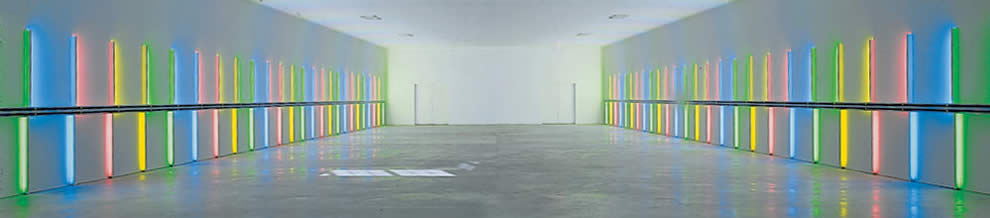
We kept it moving though – there was even more to see. We walked outside the main building and continued through the campus, ducking between bungalows to find Richmond Hall, an old neighborhood grocery turned dance hall. Dominique de Menil acquired it in the 80’s and had since converted the space to house site-specific light installations by Dan Flavin. It’s truly like stepping into another world: the grey concrete space is lined on either side with flourescent sequences of yellow, green, blue and red…vertical columns, one after another after another repeating through the entire space. It was pure joy.

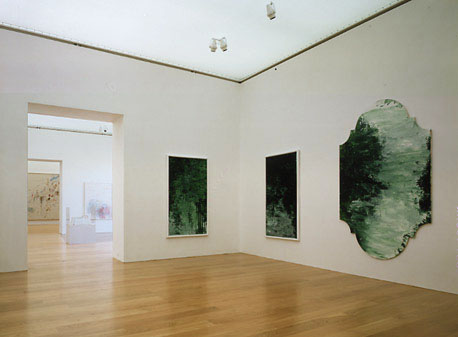
Finally, we made our way to the Cy Twombly Gallery. He is one of my favorite artists (I know, I know I have a lot of them) – coincidentally, I went to school in his hometown of Lexington, VA. His work is hard to categorize – not exactly AbEx, not quite Minimalism not Pop, but all of those. If you explore his seemingly crazy, energetic scribbles, you find traces of poetry – references to history and mythology and always scrict adherence to composition. The marks are set, then erased and then brought back. The colors melt like the fading of memories of stories being told. This time around, my favorites were the green paintings. The gallery is a gorgeous, light-filled space (again baffled skylights) that avails itself from one space to the next. The design of the space combines with the work, much like the other buildings on the Menil campus.

The effect thoughout the collection is to elevate the experience and to interact with the artwork. For me, it made me look at artwork that I thought should be familiar and consider the power of context.

Barnett Newman "Broken Obelisk" at Rothko Chapel

Barnett Newman “Broken Obelisk” at Rothko Chapel

Michael Heizer at Menil Collection

Michael Heizer at Menil Collection

Rothko Chapel

Rothko Chapel

Cy Twombly Gallery

Cy Twombly Gallery

Dan Flavin Installation at Richmond Hall

Dan Flavin Installation at Richmond Hall

The Lucky Elite

I was reading an old article that Janet Tassel wrote in the Harvard Magazine about the role art museums play in civilization. She goes on a bit in different directions, but ultimately reflects the line of thinking that museums are repositories of collected objects that showcase the greatest achievements throughout the ages. As institutions, they should be be set apart and keep a view to the long arc of history, not the whims of popular society.

In the article, James Cuno (then of the Harvard Museum, now head of the Getty) and Philippe de Montebello (the Metropolitan) both concur that museums are by definition elitist. “That is what art is, and that is what every visitor to the museum is—by crossing the threshhold they are joining the elite.”

This got me to thinking – the other day I went to the Hirshhorn to see Ai Weiwei’s exhibit “According to What?”  I was really looking forward to it and wanted to make sure I took my time and thought about the works and gave each and every installation and object the thoughtful consideration it was due.  Given I might have been a little hungry and going to an exhibit with low blood sugar is not the best, but I found myself distracted and really annoyed by almost everyone around me.

I was put off that no one seemed to treat the show with the same deference that I was giving it. I know it was a holiday weekend and a lot of people were travelling but really…pulling suitcases through the museum?  It seemed to me like the kids were running around – making shadow puppets on the walls of video projections; people were taking calls to arrange travel, to make dinner plans, and who know what kind of sordid engagements. One guy had his skateboard – and the cameras were click, click, clicking….ughhhh!!!

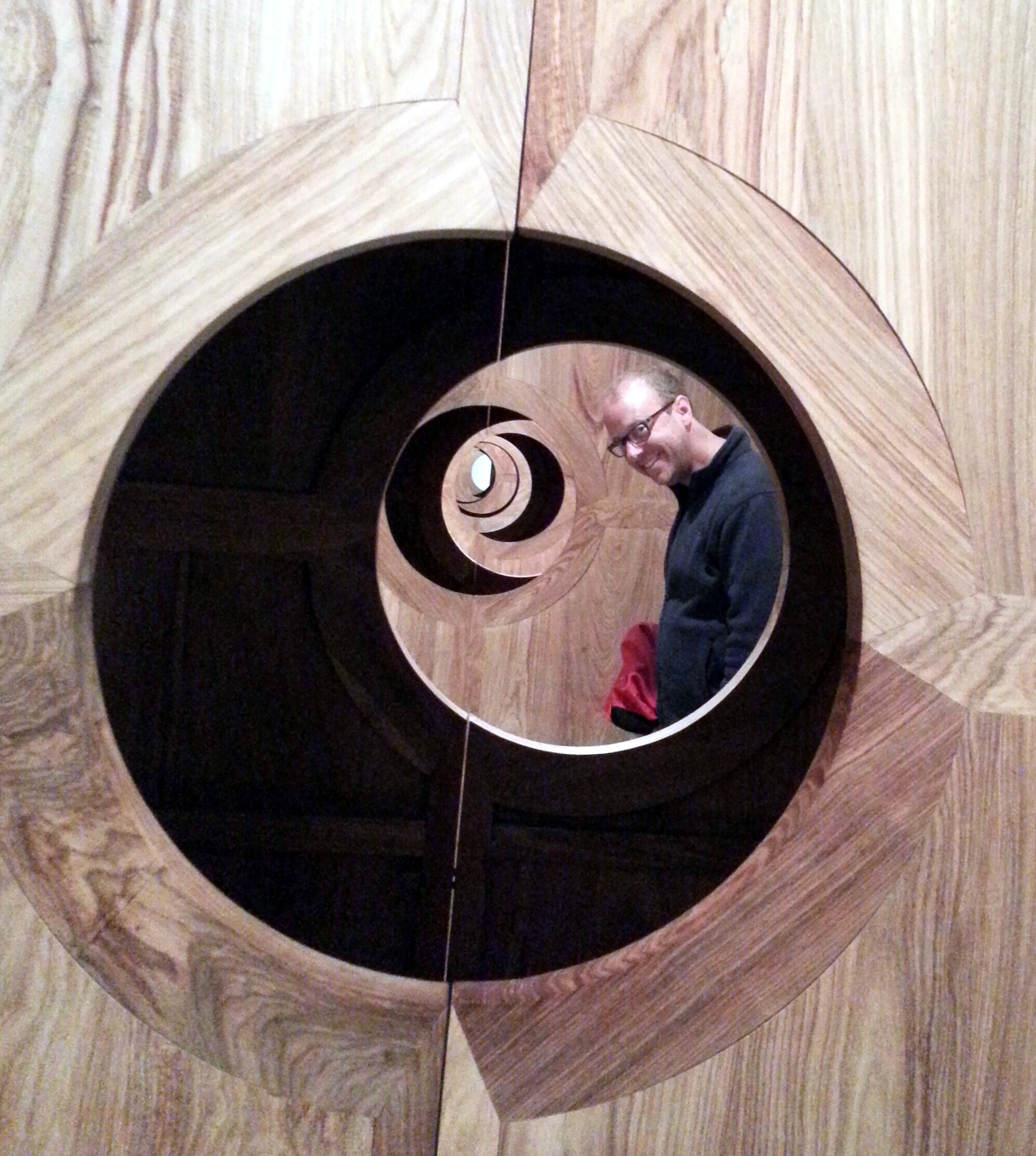
I got to the installation of beautifully crafted chests that are designed so that viewers can look through their various openings and see the phases of the moon. After waiting patiently for my turn to check it out, when I got to the opening my lovable and humorous partner was there smiling through the other side.

He got me to stop a moment, breathe and re-frame my experience.  I could choose to enjoy myself or not and I could choose to be bothered by the crowds or not.  I looked around and actually envied those other people – the kids running around without a care and the adults that didn’t need to give their full attention to the exhibit. How wonderful it is that children are exposed to art and given the opportunity to be themselves around it. All those visitors were living their lives in a setting where art was a part of it.

It occurs to me that a lot of us don’t get that luxury of experience – I didn’t grow up running around inside museums and galleries. For most of us, if we do wind up crossing that ‘threshhold’, we stand in awe of what we’ve been missing.

For those lucky elite, they’re not missing a thing.

Moon Chests – Ai Weiwei with Warren

Seeing Artwork During Vacation

We just got back from vacation; we spent 7 days in Barcelona with my partner’s parents and then took a few extra days for ourselves to drive up into France and around Provence. 

Barcelona is a treat and it was great to get to share it with family.  I used to travel there on business, but it was new for the rest of our group.  We decided to rent an apartment right off La Rambla and enjoyed the convenience of being in the heart of the city.  From there we easily walked along the marina in Port Vell, over to the beaches of Barceloneta, through the gothic quarter and along the famed Passeig de Gracia.  One day we took a drive up to Figueres to see the Dalí museum and then we walked around Girona, enjoyed lunch in the old town and checked out the 11th century gothic cathedral.

After the folks left, we headed up into France and toured around a few days in Provence. The French border is only two hours and yet worlds away – we were struck by the changes in landscape as we skirted the Pyrenees and drove into the Camargue (an alluvial plain – a landscape that reminded us of the Chesapeake Bay), the food, the culture and the expense (seemed like the cost of everything immediately doubled). We stayed in Arles and then did excursions to Aix, Avignon and Montpellier.

All in all, it was a great trip for us – we did a lot but not too much…we paced ourselves and ultimately it was just right. We did wind up seeing a fair amount (okay, a lot) of art along the way – my top 10 this time around:

  1. Fundacio Miró
  2. Picasso Museum
  3. Sagrada Familia
  4. La Pedrera
  5. Dalí Museum in Figueres
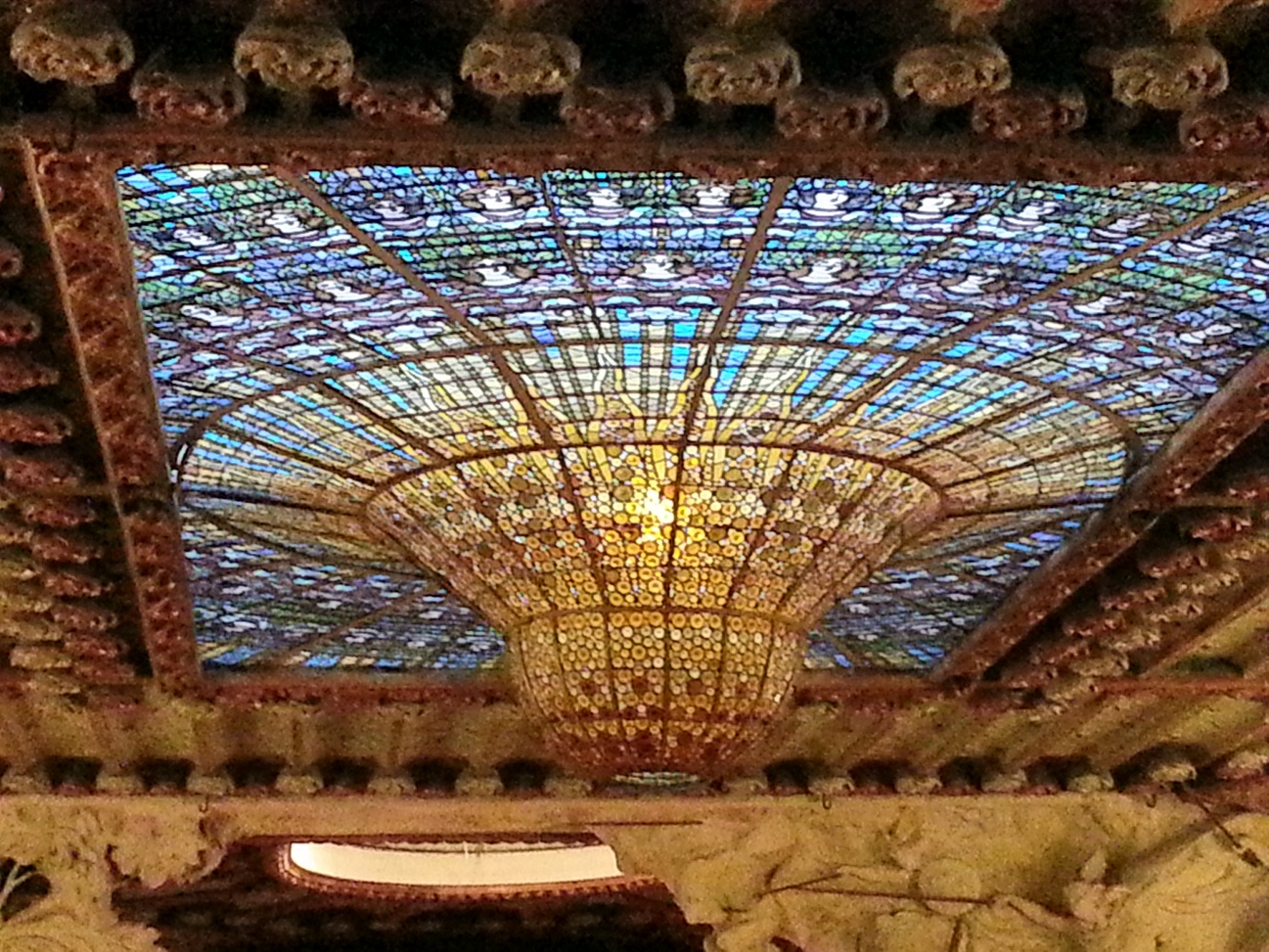
  6. Palau de la Musica
  7. Park Güell
  8. Fundació Antoni Tàpies
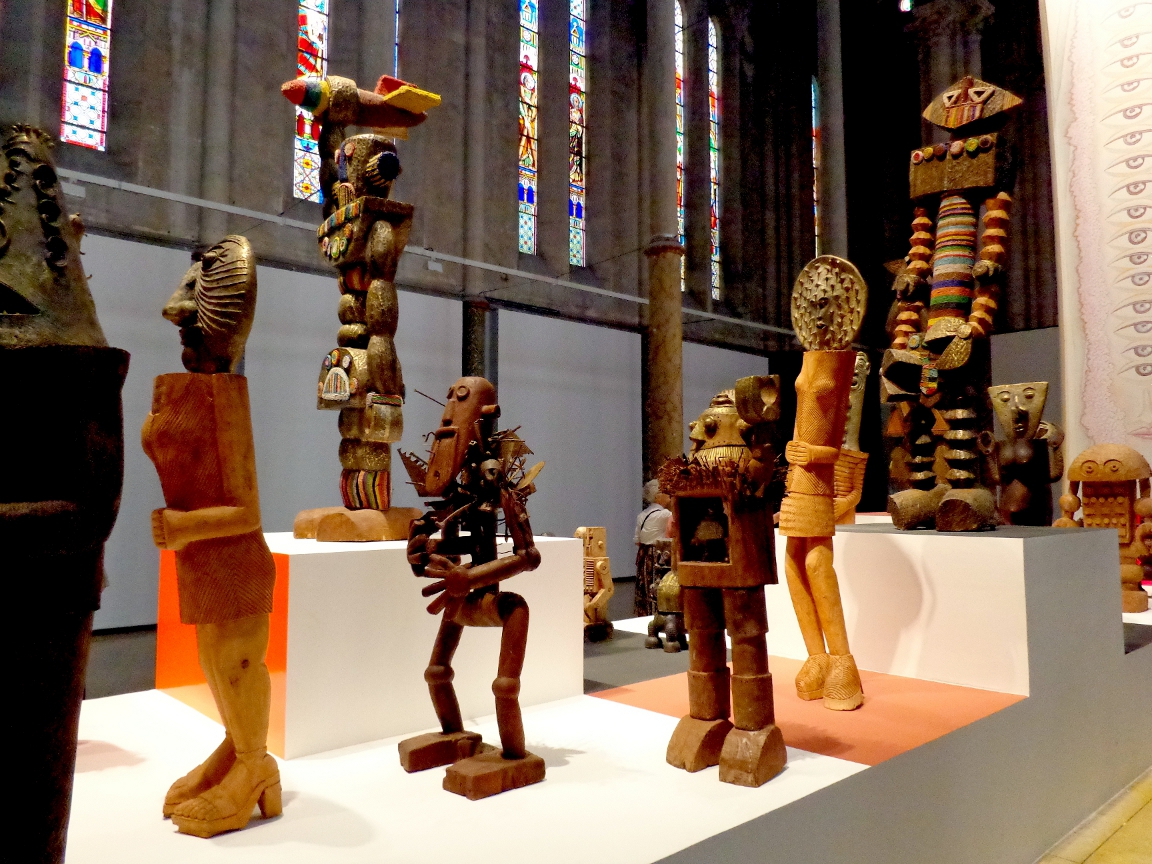
  9. Hervé Di Rosa at Carré Sainte Anne in Montpellier
  10. Van Gogh café in Arles

La Pedrera

Palau de la Musica

Salvador Dali sculpture


Sagrada Familia

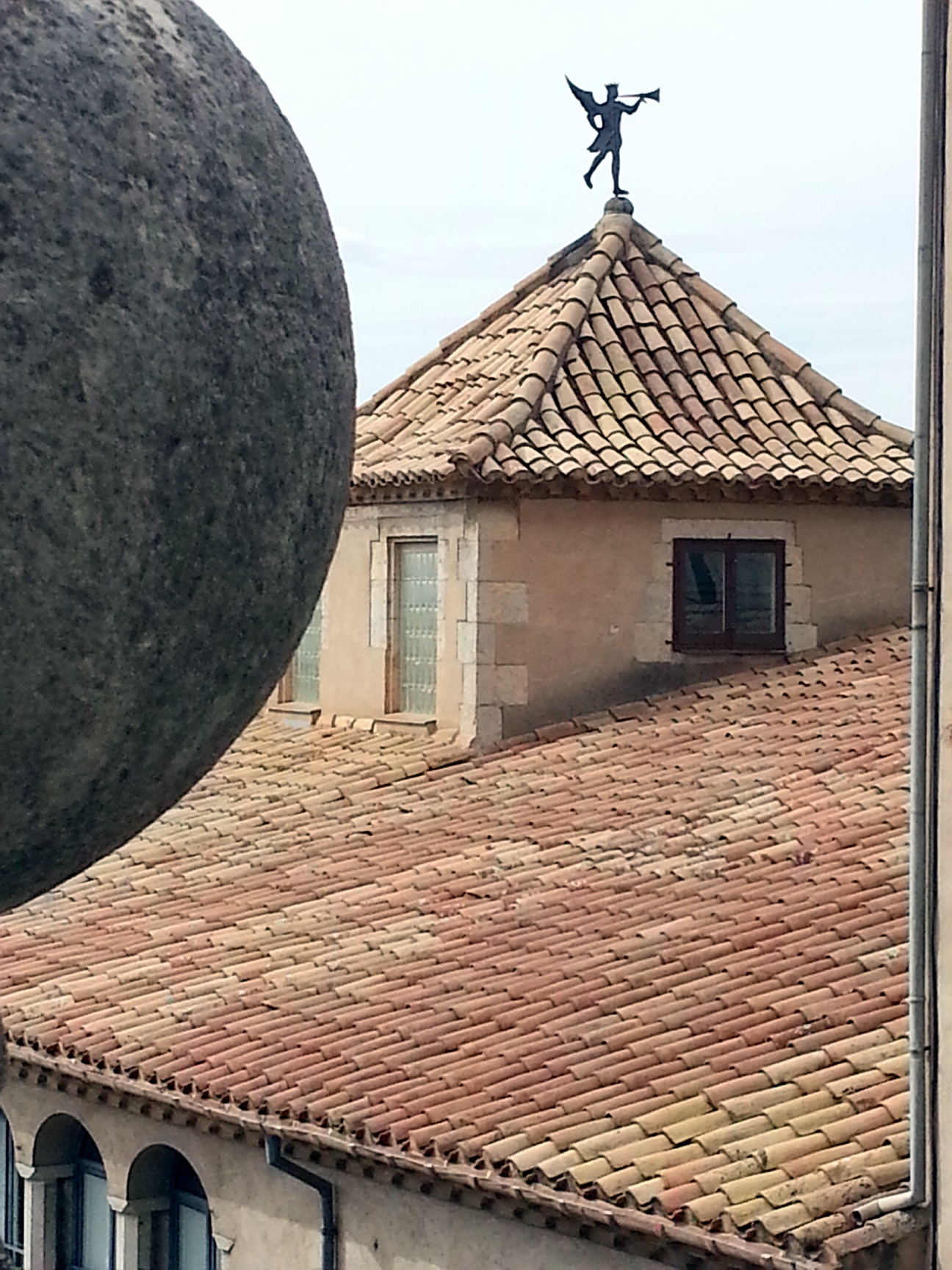
Girona

“l’Oeuf” (Place de la Comédie) in Montpellier

Hervé Di Rosa Yhayen (Procession)

Cafe Van Gogh

El Anatsui at the Denver Art Museum

“When I Last Wrote to You about Africa” is El Anatsui’s retrospective show, currently at the Denver Art Museum.

It’s funny…I find myself talking about favorite artists and I guess I have a lot of them because he is definitely one of my favorites.

I first began seeing his work about 10 years ago when I was travelling back and forth to London. Since then, I have admired his work in New York, Washington, DC, Paris, Hong Kong, San Francisco, Seattle and here in Denver. I have been enamored with the metal tapestries of bottle caps draped on walls, suspended from the ceiling and seemingly dropped onto the floors. I have tried to grasp the underlying meanings of using recycled found materials, and the obvious consumption and economic engines behind the overwhelming volume of bottle caps, largely from liquor bottles.  I have looked at the patterns and made my assumptions about their connection to distant and unkown (to me) cultures.  Mostly, I have enjoyed the high/low; hard/soft; heavy/weightless; effortless/meticulous nature of the work…they are truly stunning, shimmering works that leave me spellbound.

So with all that in mind, I thought I had some idea of who El is as an artist and what I could expect in seeing the retrospective, pulled together by Lisa Binder, Curator at the Museum for African Art, New York.

I was so wrong – I was in no way prepared for the breadth of experience and depth of his work.  The show brings together the full range of the artist’s work, from wood trays carved with symbols familiar to the Akan people of Ghana; his Broken Pots series (and his unbroken ceramic pots); beautiful paintings rich in color, symbology and landscape; driftwood statues, and even the beloved metal wall-hangings that have taken the art world by storm in recent years. I was thankful to get to hear him talk about his experiences, his development as an artist and as a professor and his mostly just his work.

If you get the chance to see the show, in Denver through the end of the year, and then in Dallas this winter, do…definitely do.  I have a feeling you might just discover one of your favorite artists too!

El Anatsui – Old Cloth Series at Denver Art Museum

Boston July 2012

Earlier this month we took a week and a half to go to Boston and then up the coast of Maine. We got to visit dear friends in both areas and we got to unwind while checking out New England.

In Boston, we did our normal walkathon tour of the city, winding our way up the Harborwalk , heading into the North End, wrapping around to Beacon Hill, Back Bay over to the South End and back by Tufts and into Downtown. We went jogging through Boston Common and shopping over on Newbury Street. While we never miss Faneuil Hall or Mike’s Pastry Shop over on Hanover Street, this time we also made the effort to branch out and we were glad we did. We enjoyed our meals down on newly-trendy Tremont Street and in Chinatown and we tried out the food trucks on the Rose Kennedy Greenway.

On our fifth day we headed up the coast of Maine toward Portland and stayed the rest of the week with friends in Yarmouth. We slowed our pace way down – we hiked a little and checked out a nearby beach, one evening we took a water taxi to one of the islands for dinner. We took a drive up to Christmas Cove, and spent a little time shopping in Freeport. We drank wine and gorged ourselves on lobster … actually having lobster for breakfast, lunch and dinner!  Most of the time we simply sat out on the veranda and enjoyed letting ourselves do nothing.

I couldn’t help myself – I tried, but I just couldn’t. We managed to skip the art galleries altogether (I looked longingly into a few windows), but still wound up visiting three art museums in Boston: The Museum of Fine Arts, The Isabella Gardner and the Institute of Contemporary Art.  We were impressed with the new architecture at each of the museums and we enjoyed the exhibits – two of my favorites:

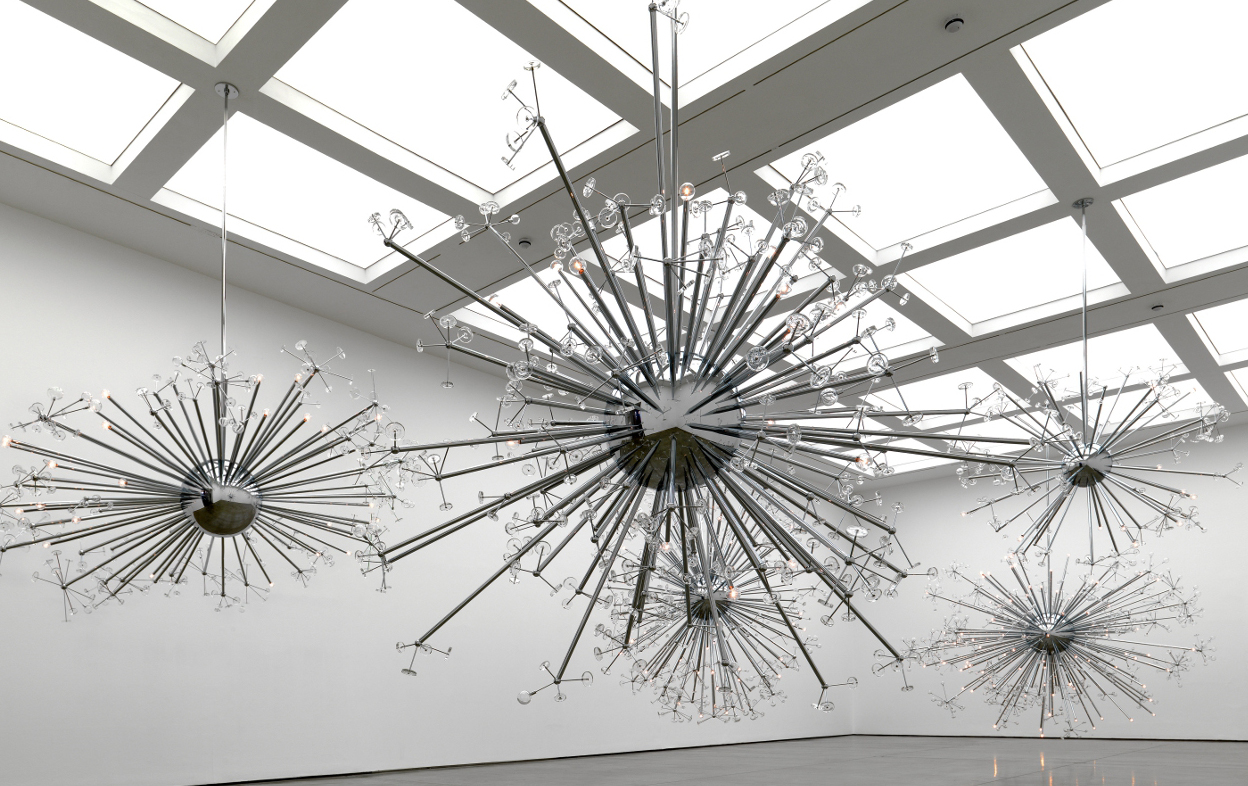
Josiah McElheny’s exhibit at the ICA, Some Pictures of the Infinite, takes a conceptual look at time and space continuums.   McElheny is the kind of artist that makes me wish I was smarter – each display challenged me  to try to grasp a concept of infinity that, by definition, is unattainable.  His blown-glass works break down barriers between craft and art – the mirrored spirals of suspended orbs combine scientific theories of the cosmos with iconic mid-century modernism.

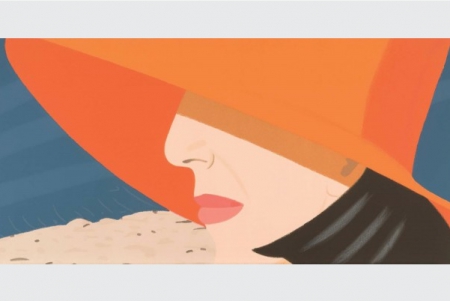
At the MFA, the highlight was Alex Katz Prints – the show includes 125 pieces on display that together emphasize Katz’s artistic clarity of voice over the past 60 years.  He creates arresting images using as few elements and details as possible. He reduces form and color to produce images of graphic quality that are immediately recognizable and the subjects – his beloved Ada, his family & friends and the Maine landscape retell his story of a life well-lived.

Orange Hat by Alex Katz

Endlessly Repeating detail by Josiah McElheny

Top 10 in DC – May 2012

I passed through DC on my way home from vacation this week  – it was an opportunity to connect with a couple clients, do some research on a series of prints I’d like to make (my own work) and also to touch base with a few artists. While I was there I went to 4 museums and about a dozen galleries. As always, I found a broad spectrum of things to interest me – ranging from the gallery of Whistlers and The Peacock Room at the Freer to Jay Musler’s incredible feathery glass art at Maurine Littleton’s Gallery to Mark Morgan’s quirky sculptures made of discarded detergent bottles at Arts @ 1830.

For me, the two most exciting shows this time around were the Miró exhibit over at the National Gallery and then a small exhibit of privately-owned Matisse & Picasso prints and drawings at Neptune Fine Art in Georgetown.

Now, if you haven’t seen the show over at Neptune, I am sorry to say it is coming down – Christine Neptune shares the space with her husband, Robert Brown. He will be up next, celebrating his own gallery’s 30-year success with works from his stable of artists’ – including the likes of Mel Bochner, David Nash, William Kentridge and Oleg Kudryashov.

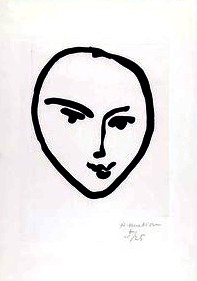
Okay, so I am getting ahead of myself – the Matisse and Picassos…what a treat! The show consisted of about 3 dozen prints and drawings that belong to two different collectors – they are all in beautiful condition. My favorites were the obvious Nadia portrait and then two tiny little Picassos, rare little prints that were from editions of only 10 and 14, respectively.

I really wasn’t expecting to happen upon the gallery at all; I was headed next door  to see another show when I noticed the gallery. The townhouse is like so many in Georgetown, a nest of intimate rooms that stand above a rear courtyard..perfect for showing off master prints and illustrating how potential buyers might actually live with revered works. Coincidentally, a dealer I had met with not an hour earlier had recommended this gallery to me so I figured, “why not?” I am so glad I checked it out and will keep it in mind as a “must see” in the future.

The Miró exhibit  over at the National Gallery is blockbuster. The show consists of more than 150 works, covering a period of 6 decades. I personally love this type of show –   it is constructed to lead the viewer through the life of the artist,  showing the progression of works in the context of what was going on around the artist.

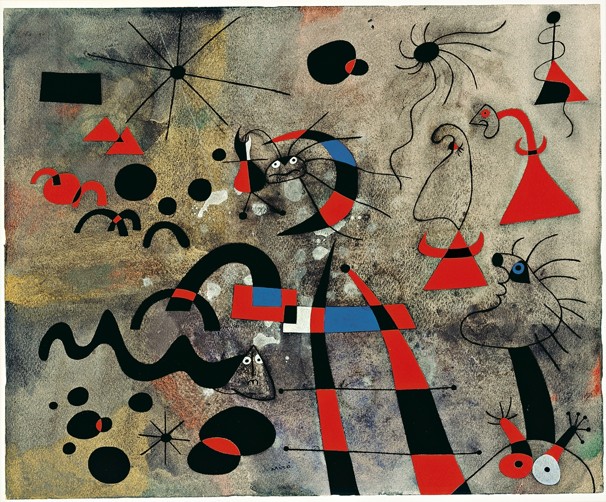
“The Ladder of Escape” highlights Miró’s loyalty to Catalonia throughout a lifetime of hardship: two world wars, the Spanish Civil War, and during Franco’s dictatorship. His story winds its way from farmlife of the 1920’s through periods of politically-charged explorations in surrealism ultimately to the self-referential symbols that together make the vocabulary for his fantastical, poetic later paintings.

I am enamored with the constellation of works – each one a puzzle, revealing itself slowly, taking the effort of the viewer’s attention to decipher.

My Top 10 this time around:

  1. Joan Miró at National Gallery
  2. Matisse & Picasso at Neptune Fine Art
  3. Peacock Room at the Freer
  4. Colby Caldwell at Hemphill
  5. Foon Sham at Project4
  6. Ai Weiwei’s Fragments and Hokusai: 36 Views of Mount Fuji at Sackler Gallery
  7. Renate Aller at Adamson Gallery
  8. Julia Fernandez-Pol at Morton Fine Art
  9. Jackie Battenfield at Addison Ripley
  10. K Silve at Susan Calloway Fine Art
  11. Getting to go visit Gail Vollrath and Brian Petro in their studios.

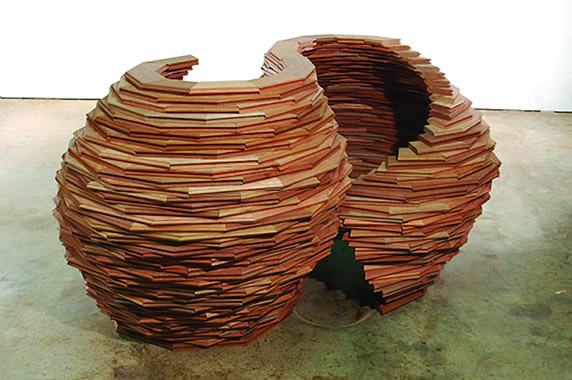
Foon Sham – Spiral Vessel

Colby Caldwell – How to Survive Your Own Death

Jay Musler – Blue State Bowl at Maurine Littleton

Joan Miro – The Ladder of Escape

Picasso – Toute la Vie (1960)

Julia Fernandez-Pol