The MUST-SEE Show in Denver.

Featured

If you only get to see one show in Denver, you really should check out the David B. Smith Gallery.

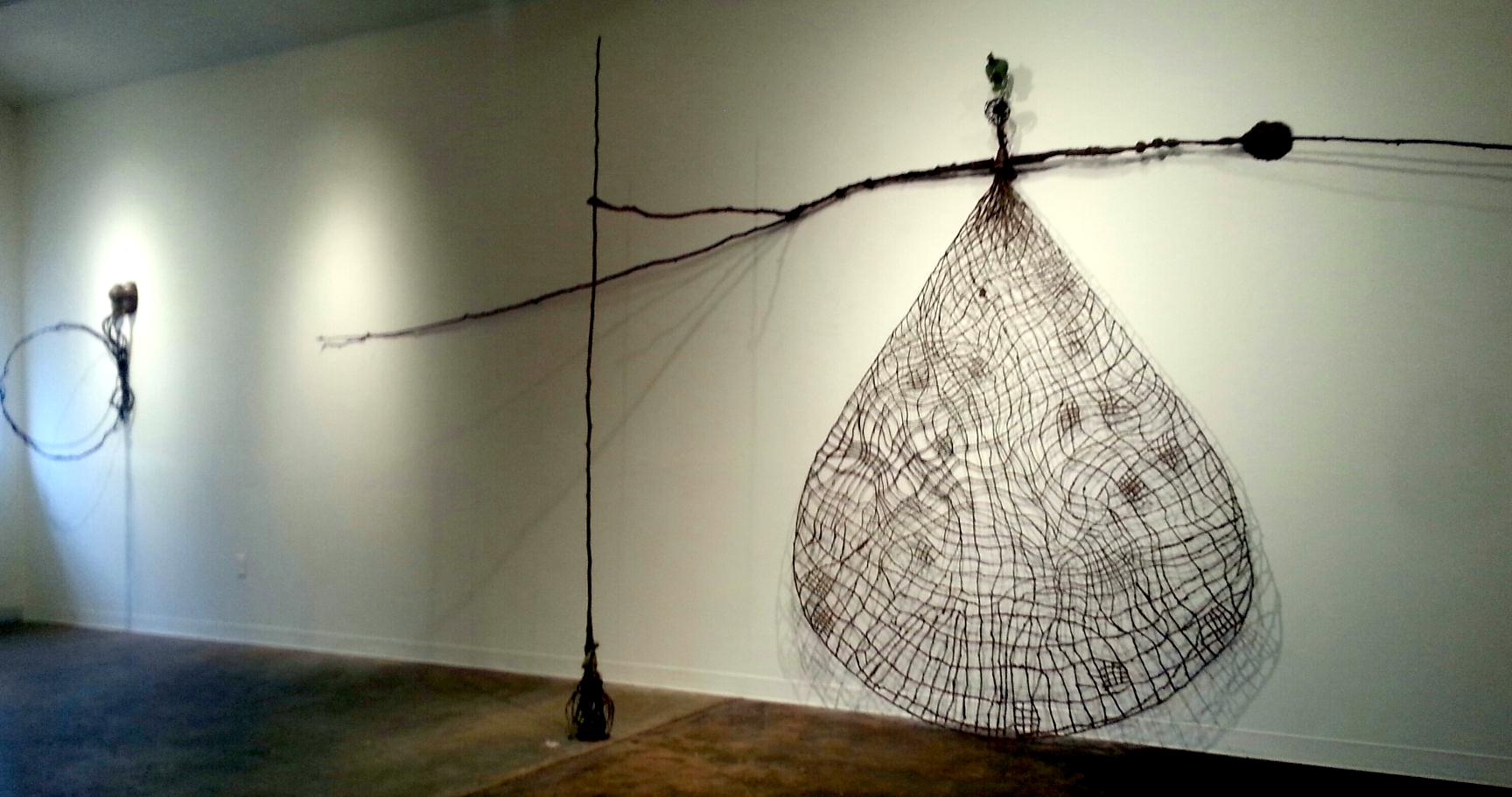
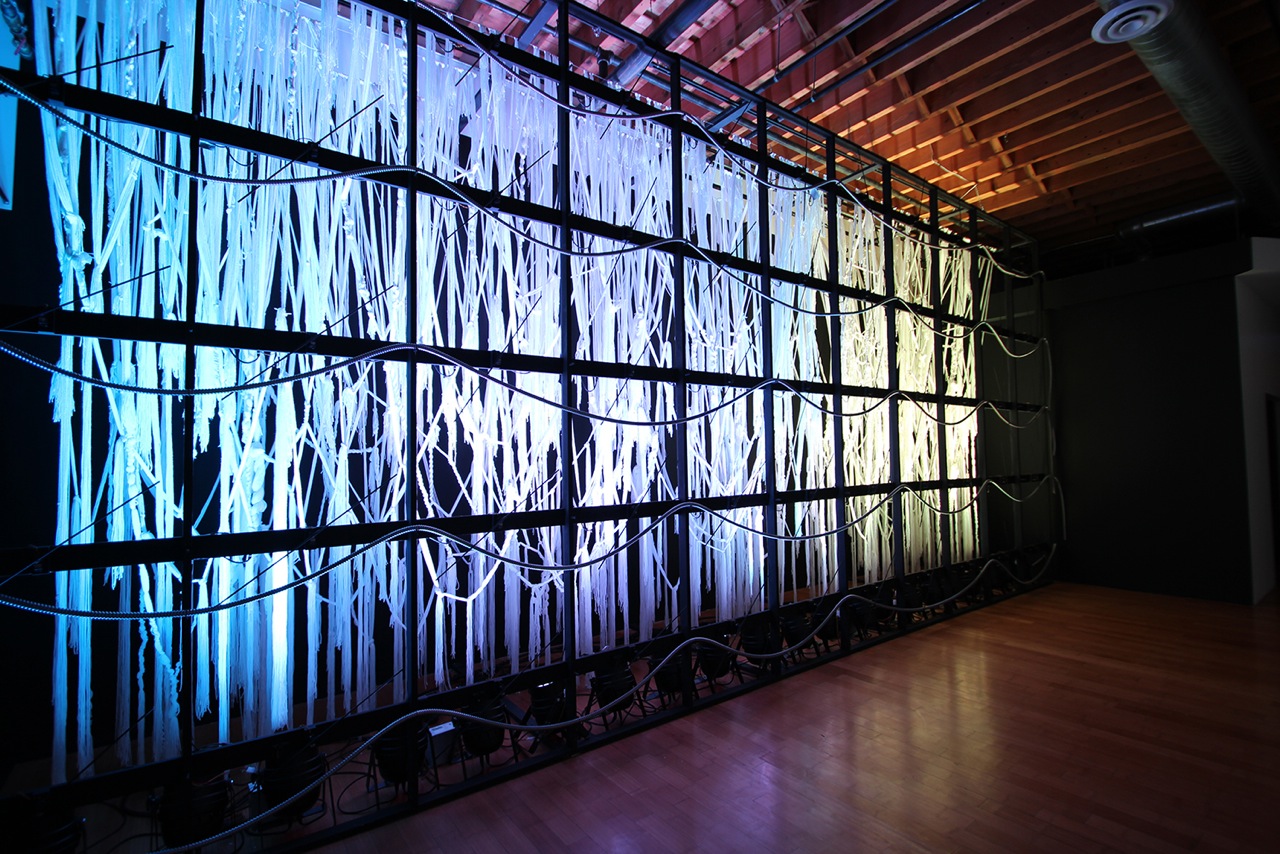
Michael Theodore fills the main gallery with an installation called “endo/exo.” At first glance (and I think probably in most of the image shots) it looks like industrial scaffolding; the lighting effects on the complex web of fibrous knots hint at stage design. It takes up the entire space and ultimately, he’d like to make it even bigger – like hundreds of feet bigger!

Take your time with it because it has so much to offer.  I got the chance to chat with Michael the other day and he explained a bit about his fascination with rhythms – both organic and mechanic (this makes total sense – he is a music professor); he envisions an increased interdependency…a symbiosis of man and machine.  It’s more than just man and machine, but really an exploration of the increased layering of complex systems and how they interact.

It’s easy to infer an influence of other artists who are working with light – Olafur Eliasson, James Turrell, Leo Villareal, and perhaps that’s right, but the work is more than that. It actually reminds me a bit of the installation in the Fuse Box at the Denver Art Museum; coincidentally, Annica Cuppetelli and Cristobal Mendoza have installed an interactive light display on rope. Their imagery responds with movements and sounds that draw the viewer’s attention away from the actual rope and into the digitized realm of human/computer interaction.

Micheal’s ropes never leave his story, they are held captive by the confines of the machine – there is a human/computer interaction here too:  lights change, the tick, tick, ticking of the clocks (okay, not actual clocks, but motorized ticking rods that could be clocks) speeds up and slows down, pausing for effect.  I find the narrative to be compelling – spellbinding, a bit sinister, and absolutely of the moment.

The rest of the show includes gorgeous generative loops on paper, delicately engraved scratchboards, and a series of video works and printed stills on view in the loft space.

There are a lot of shows in Denver right now that I have already written about – many of which are closing soon, but this one is up for a couple more weeks (June 15th). If you haven’t seen it already it is the one to rush out and see.
www.davidbsmithgallery.com

"endo/exo" by Michael Theodore, Courtesy the artist and David B. Smith Gallery; Photo: Melinda Kern

“endo/exo” by Michael Theodore, Courtesy the artist and David B. Smith Gallery; Photo: Melinda Kern

"endo/exo" by Michael Theodore, Courtesy the artist and David B. Smith Gallery; Photo: Brian Birlauf

“endo/exo” by Michael Theodore, Courtesy the artist and David B. Smith Gallery; Photo: Brian Birlauf
10 Shows to See in Denver Right Now – April 2013

Featured

There are so many great shows going on right now – I think that even though it’s still snowing outside, the exhibits are heating up:

  1. The shows at Robischon are an odd mix of Arcimboldo and vanitas  mixed in with woodland adventures and carnivals. As you’d expect at this gallery, the shows flow seemlessly – I think I love everything about it.
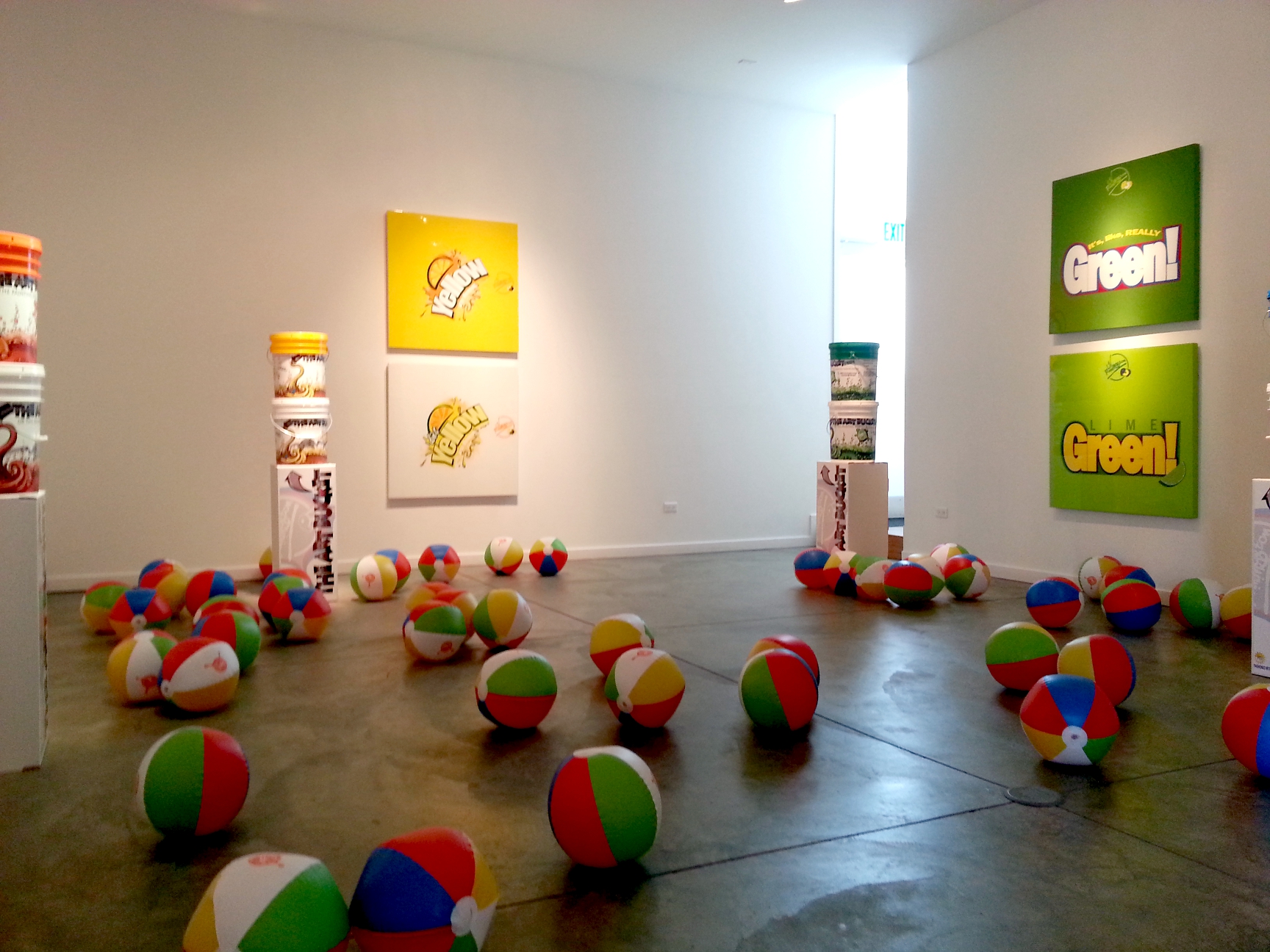
  2. “The Art Bucket” by Colin Livingston at Plus Gallery – Perhaps the most provocative show in the city right now. At first glance these highly-energetic swatches of color seem banal. Viewers have the option of leaving it at that or to delve deeper into a confrontational look at commoditization, consumerism, and consumption.
  3. “Georgia O’Keeffe in New Mexico: Architecture, Katsinam, and the Land” at the Denver Art Museum  – go see it now, it’s closing soon!
  4. “Bemsha Swing in Denver” Installation by Yoshitomo Saito at Ironton Studios – He is my kind of artist; his bronze sculptures capture the sacred in the everyday.
  5. “Heidi Jung: Black & White” at the Arvada Center – I especially like the charcoal-on-paper pieces, created in situ.
  6. “Long Lost” by Ryan Everson at Gildar Gallery –  For me, each peace would stand alone better than with the distraction of the others. That said, this Portland artist is clever and thoughtful and he offers up the chance for viewers to feel like they are clever and thoughful too.
  7. “Gather & Gentle Motion” at Walker Fine Art – While Roger Hubbard’s kinetic sculptures seem to be an audience favorite, I am obsessed with Brigan Gresh’s smooth, waxy abstract surfaces that reveal constance evolution of narrative.
  8. “Mind over Matter” at Space Gallery – Some of my favorite paintings out there right now; don’t forget to check out the back gallery where the show continues with Pat Aaron’s “Key West” encaustics and Ian McLaughlin’s “botanical science fiction.”
  9. “Moving Paint 2012-2013” by Ania Gola-Kumor at The Sandra Phillips Gallery – The new gallery space gives her complex paintings the natural light they require; I think they look better than ever.
  10. “Grey Towers” by Monque Crine at Goodwin Fine Art – These black and white paintings document JFK just months before his assassination and sit in dialog with her grandfather’s photographic archives of the same.
Colin Livingston at Plus Gallery

Colin Livingston at Plus Gallery

Ryan Everson at Gildar Gallery

Ryan Everson at Gildar Gallery

Brigan Gresh at Walker FIne Art

Brigan Gresh at Walker Fine Art

Yoshitomo Saito at Ironton Studios

Yoshitomo Saito at Ironton Studios

American Museum of Western Art

I often write about the art I see during my travels, but the reality is there is a lot to see right here in Denver.  A couple months ago I went with an art historian to The American Museum of Western Art. It was a treat and really a must see in Denver’s growing art scene.

The museum is the showcase of the Anschutz Collection, arguably the best private collection of western art in the world.  It packs, salon style, as many pieces as it possibly can into the 4-story Italianate building from the 19th century (The building itself is worth checking out and has a storied past – read http://www.westword.com/2012-05-31/culture/museum-of-the-american-west-anschutz-collection/  for more information.) There are more than 600 pieces covering works spanning 150 years of artists’ engagement with the West.

The museum is generally planned according to movements and schools of art and while not exactly in chronological order moving from the oldest works on the lower level and up to the most recent on the upper levels.  It is useful to think about these schools and movements and you progress through the museum – there is so much to look at, it helps to organize the experience and see the works in relation to what other artists were up to at any given time.  Docents typically lead you through the floors, but I am told visitors are free to wander.

The main groupings of works include:

The Expeditionary Artists (George Catlin, Seth Eastman, Alfred Jacob Miller, John Mix Stanley); these guys generally went along on expeditions and scouting adventures to record journeys though the west. Their paintings often showcase the interactions with various tribes and depict trappers as they developed the fur trade.

Hudson River and Rocky Mountain Schools ( Albert Bierstadt, Thomas Moran, Worthington Whittredge); these painters typically lived in New York City  and often are most known for their paintings of the Hudson River Valley and later, the Rocky Mountains. These landscapes are filled with light and convey a sense of splendor.

Narrative Artists (George DeForest, William De Leftwich Dodge);these guys were the basic story tellers and depicted what was actually happening as settlers took hold in the west.  They took inspiration from the Renaissance, focusing on playwrights and writers, and poets while telling stories of battles and the gold rush.

California Painters  (Charles Christian Nahl, George Henry Burgess, A.D.O. Browere); these guys came for the gold but went on to showcase early California, often celebrating its Spanish heritage.

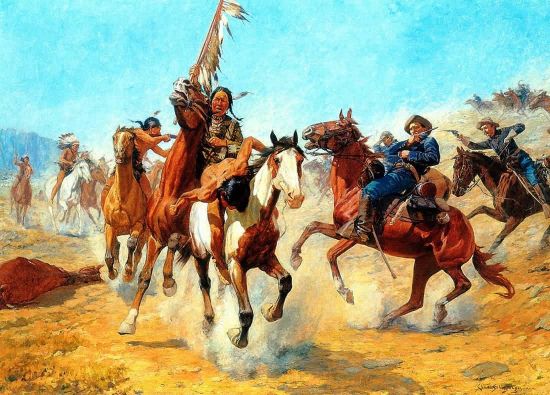
Interpreters of the Old West (Frederic Remington, Charles M. Russell, Charles Schreyvogel); even as the West was quickly developing into a major hub of urbanization, the public embraced their depictions of heroic frontiersmen and the idealized landscapes that filled the pages of papers, magazines and dime-store novels.

Illustrators (NC Wyeth, Dean Cornwell, Herbert Dunton); these artists of the early 20th century were the favored illustrators for short stories, novels and magazines.  Because of the publications, theirs are the iconic images most recognized.

Taos and Santa Fe Schools (Ernest M. Hennings, Ernest Blumenschein, Walter Ufer); these guys were educated artists in search of subject matter. As they travelled west, they basically landed in northern New Mexico and stayed. They developed a style of Southwestern art that is immediately recognizable.

American Regionalist Painters (Thomas Hart Benton, John Stewart Curry) These guys painted America’s heartland in a pseudo-realistic style that gave emphasis to everyday life of small towns and farmlands.

New Deal Artists (Maynard Dixon, Victor Higgins, Frank Mechau,) In the 1930’s Federal programs including the Works Progress Administration and the Section of Painting and Sculpture employed artists to commission paintings for post offices, state capitols, and government buildings. Many of these paintings were murals that depicted the strength and resourcefulness of Americans and the bounty of the landscape.

Expressionists (Marsden Hartley, Birger Sandzén); these artists were modernists, they conveyed emotion through manipulations of color, surface, and form.

Cubism and Abstraction (John Marin, Georgia O’Keefe); it is at this point in the tour of the museum that I really began to notice how quickly styles of art were changing, not only in the West, but around the world. The museum speeds through different modernist styles.

The size of the museum belies the collection – it really is so extensive that you can go back to again and again and continue to see different things and learn more about the development of art of the West and how it relates to the history of our country. (http://www.anschutzcollection.org/)

The-Silenced-War-Whoop - Charles Schreyvogel

The-Silenced-War-Whoop – Charles Schreyvogel

The-Last-Race-Mandan-O-kee-pa-Ceremony George Catlin

The-Last-Race-Mandan-O-kee-pa-Ceremony George Catlin

Death of Minnehaha - William de Leftwich Dodge

Death of Minnehaha – William de Leftwich Dodge

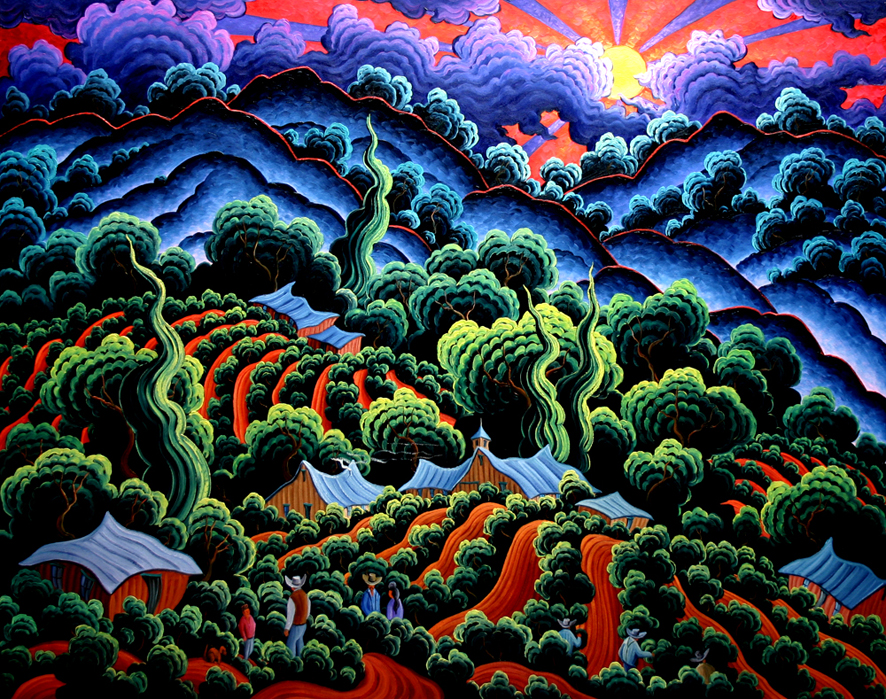
Sunrise In The Vineyard Kim Douglas Wiggins

Sunrise In The Vineyard Kim Douglas Wiggins

Consider Building an Art Collection

I like to go on home & garden tours to get inspiration and to see how my place measures up, and to see art (of course, since it’s what I do). There are the decorated homes – the ones where the artwork just matches each room so perfectly, the size and colors. Those certainly are beautiful homes. Some of the homes have an eclectic vibe which I guess I relate to because that is most often how I describe my own home. Then there are the homes where the owners have so much stuff: posters, paintings, photographs, odd farm-equipment sculptures, wind chimes, glass-eyed porcelain dolls in the guestroom, bric-a-brac.

Every once in a while, a home just makes so much sense – those are the ones where there is such obvious thought behind every decision. The artwork seems to take on a different purpose – each choice is made in the context of the others. Whether the homes have American folk art, impressionist paintings or black & white photography, those are the tours I really love.

The art collections that get me going are really focused; I love the idea that someone develops a set of ground rules and then uses those parameters to actually choose their art. If you want to take a more deliberate approach to getting artwork – try to at least consider it in terms of how it might work in your “collection”.  Most of us wind up finding something we like here and something we like there and then just kind of throw it all together, wondering why it doesn’t necessarily work. The result is that trove of abandoned treasures under the beds, in the closets, basements, attics, or out in the garage.

Of course, you could hire a consultant like me – but even if you don’t, give your choices some thought.  Whether you just discuss your ideas with someone or you chart it out or put it into a spreadsheet, try to establish some guidelines. If you can articulate a framework for the artwork you choose, you can begin to build a collection.

For more information on how I can help you acquire art and/or care for what you already have, see the about tab on my blog.  I’d love to help.

Picture3_edited

Laura Letinsky at the Denver Art Museum

Laura Letinsky: Still Life Photographs, 1997–2012, is on view through March 24, 2013 at the Denver Art Museum.

Laura Letinsky is one of those smart ones – you know the type that makes you wish you had really focused on your homework.

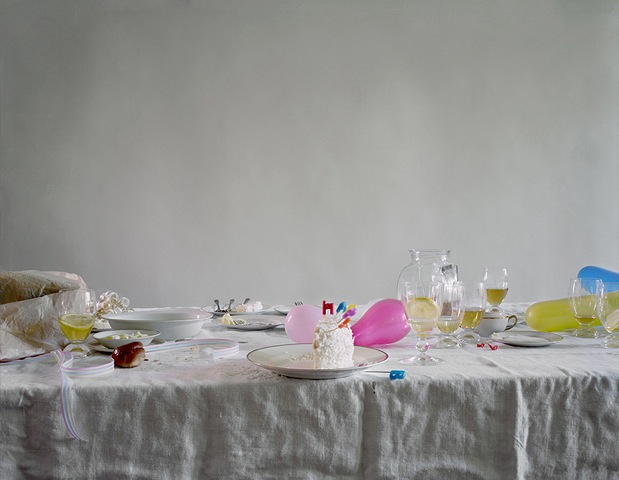
Letinsky is well-versed in art history and it shows; her gorgeous still-life images are immediately accessible to the viewer because of their familiarity. The influence is obvious and yet… there is something more…or less. These aren’t the luscious depictions of the lavishly abundant Dutch tables of the 17th Century. Hers are barely-there pieces of fruit on white linens with white backdrops. There are none of the skulls of the vanitas, and yet there is the melancholic reminder that her stories are of moments passed.

Letinsky is a philosopher. We generally obsess with that fleeting moment of perfection when a peach is at its very juiciest firm-fleshed fullest or a lily is sweetly fragrant. Letinsky’s focus is more on the reality this is the penultimate state of dying. In her photos the fruit has that juicy-sticky quality that makes us want just to clean it up before the flies begin choke on the decay. The perfume is beginning to remind us of the stench of fetid water.

Letinsky is a technician – she uses film and she knows all those things that photographers seem to know about cameras and lenses and lighting. I heard her talk and for all I know, when it came to the technical “stuff” she could have been describing how to build spaceships.

Letinksy is a photographer – Of course she knows that the images engage viewers to connect the dots to history and confront mortality and philosophize about perceived meaning, but above all else she is a photographer. I once asked a painter about some of her recent works – the symbolism or meaning of the recurrent imagery; she laughed and told me “It’s paint on a canvas.” It’s funny because I didn’t quite get it then; I mean, it seemed like an idea I could get behind when looking at Abstract Expressionism, but her paintings were figurative. I do get it now – Letinsky’s work sets it out there: there is decaying fruit, spilt wine, paper cups and wrappers; but ultimately they are photographs. She is in the business of taking light and color and composition and capturing that with her camera in a way that allows her to share her “paint on a canvas.”

"Untitled #54" from the series "Hardly More Than Ever," 2002, by Laura Letinsky. (Photo provided by the Yancey Richardson Gallery)

“Untitled #54” from the series “Hardly More Than Ever,” 2002

ArtLook-Art-Look-Laura-Letinsky

Untitled, #5 2005 To Say It Isn’t So


Untitled #2 from the series "The Dog and the Wolf," 2008

Untitled #2 from the series “The Dog and the Wolf,” 2008

Untitled #1 31x40 from the series "The Dog & The Wolf"

Untitled #1 31×40 from the series “The Dog and the Wolf” 2008

El Anatsui at the Denver Art Museum

“When I Last Wrote to You about Africa” is El Anatsui’s retrospective show, currently at the Denver Art Museum.

It’s funny…I find myself talking about favorite artists and I guess I have a lot of them because he is definitely one of my favorites.

I first began seeing his work about 10 years ago when I was travelling back and forth to London. Since then, I have admired his work in New York, Washington, DC, Paris, Hong Kong, San Francisco, Seattle and here in Denver. I have been enamored with the metal tapestries of bottle caps draped on walls, suspended from the ceiling and seemingly dropped onto the floors. I have tried to grasp the underlying meanings of using recycled found materials, and the obvious consumption and economic engines behind the overwhelming volume of bottle caps, largely from liquor bottles.  I have looked at the patterns and made my assumptions about their connection to distant and unkown (to me) cultures.  Mostly, I have enjoyed the high/low; hard/soft; heavy/weightless; effortless/meticulous nature of the work…they are truly stunning, shimmering works that leave me spellbound.

So with all that in mind, I thought I had some idea of who El is as an artist and what I could expect in seeing the retrospective, pulled together by Lisa Binder, Curator at the Museum for African Art, New York.

I was so wrong – I was in no way prepared for the breadth of experience and depth of his work.  The show brings together the full range of the artist’s work, from wood trays carved with symbols familiar to the Akan people of Ghana; his Broken Pots series (and his unbroken ceramic pots); beautiful paintings rich in color, symbology and landscape; driftwood statues, and even the beloved metal wall-hangings that have taken the art world by storm in recent years. I was thankful to get to hear him talk about his experiences, his development as an artist and as a professor and his mostly just his work.

If you get the chance to see the show, in Denver through the end of the year, and then in Dallas this winter, do…definitely do.  I have a feeling you might just discover one of your favorite artists too!

El Anatsui – Old Cloth Series at Denver Art Museum

Top 10 in DC – May 2012

I passed through DC on my way home from vacation this week  – it was an opportunity to connect with a couple clients, do some research on a series of prints I’d like to make (my own work) and also to touch base with a few artists. While I was there I went to 4 museums and about a dozen galleries. As always, I found a broad spectrum of things to interest me – ranging from the gallery of Whistlers and The Peacock Room at the Freer to Jay Musler’s incredible feathery glass art at Maurine Littleton’s Gallery to Mark Morgan’s quirky sculptures made of discarded detergent bottles at Arts @ 1830.

For me, the two most exciting shows this time around were the Miró exhibit over at the National Gallery and then a small exhibit of privately-owned Matisse & Picasso prints and drawings at Neptune Fine Art in Georgetown.

Now, if you haven’t seen the show over at Neptune, I am sorry to say it is coming down – Christine Neptune shares the space with her husband, Robert Brown. He will be up next, celebrating his own gallery’s 30-year success with works from his stable of artists’ – including the likes of Mel Bochner, David Nash, William Kentridge and Oleg Kudryashov.

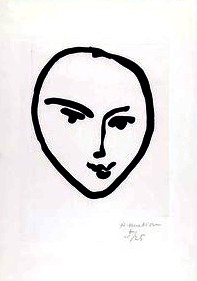
Okay, so I am getting ahead of myself – the Matisse and Picassos…what a treat! The show consisted of about 3 dozen prints and drawings that belong to two different collectors – they are all in beautiful condition. My favorites were the obvious Nadia portrait and then two tiny little Picassos, rare little prints that were from editions of only 10 and 14, respectively.

I really wasn’t expecting to happen upon the gallery at all; I was headed next door  to see another show when I noticed the gallery. The townhouse is like so many in Georgetown, a nest of intimate rooms that stand above a rear courtyard..perfect for showing off master prints and illustrating how potential buyers might actually live with revered works. Coincidentally, a dealer I had met with not an hour earlier had recommended this gallery to me so I figured, “why not?” I am so glad I checked it out and will keep it in mind as a “must see” in the future.

The Miró exhibit  over at the National Gallery is blockbuster. The show consists of more than 150 works, covering a period of 6 decades. I personally love this type of show –   it is constructed to lead the viewer through the life of the artist,  showing the progression of works in the context of what was going on around the artist.

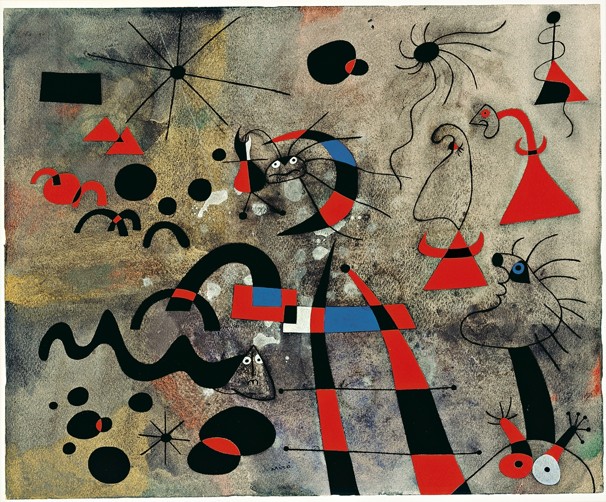
“The Ladder of Escape” highlights Miró’s loyalty to Catalonia throughout a lifetime of hardship: two world wars, the Spanish Civil War, and during Franco’s dictatorship. His story winds its way from farmlife of the 1920’s through periods of politically-charged explorations in surrealism ultimately to the self-referential symbols that together make the vocabulary for his fantastical, poetic later paintings.

I am enamored with the constellation of works – each one a puzzle, revealing itself slowly, taking the effort of the viewer’s attention to decipher.

My Top 10 this time around:

  1. Joan Miró at National Gallery
  2. Matisse & Picasso at Neptune Fine Art
  3. Peacock Room at the Freer
  4. Colby Caldwell at Hemphill
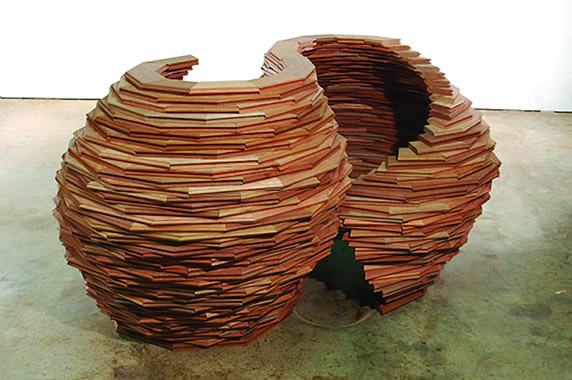
  5. Foon Sham at Project4
  6. Ai Weiwei’s Fragments and Hokusai: 36 Views of Mount Fuji at Sackler Gallery
  7. Renate Aller at Adamson Gallery
  8. Julia Fernandez-Pol at Morton Fine Art
  9. Jackie Battenfield at Addison Ripley
  10. K Silve at Susan Calloway Fine Art
  11. Getting to go visit Gail Vollrath and Brian Petro in their studios.

Foon Sham – Spiral Vessel

Colby Caldwell – How to Survive Your Own Death

Jay Musler – Blue State Bowl at Maurine Littleton

Joan Miro – The Ladder of Escape

Picasso – Toute la Vie (1960)

Julia Fernandez-Pol

Nancy Lovendahl’s Sculpture

I guess I first took notice of Nancy’s work about a dozen years ago – I frequently ride my bike up and down the Cherry Creek and the Platte River trails and I saw her series of sculptures over near Coors Field, on the west side of the Flour Mill Lofts. “Elements” are actually four circular outcroppings of sandstone and granite that provide a contemplative resting place on the northern end of Riverfront Park; the indigenous stones rest in sympathetic poses on the river’s landscape contrasting the urban backdrop of the evolving city around them.

A few years later, I saw her work again at the Sandy Carson Gallery – she was exhibiting alongside another favorite artist of mine, Lorelei Schott. Nancy had egg sculptures made of stone, ceramics, wire & wood, a series that has gone on to be shown around the world.

Since then, I have seen her work around town, in publications and online.

Recently I ran into her over at Madeleine Dodge’s studio and she invited me to come down to Sedalia and check out her latest work, “The Gathering.”

WOW! What a treat!

It’s a monumental sculpture, carved out of 300,000 pounds of limestone…the sculpture is made up of 18 pieces and is 38′ long, 30′ wide and 8′ high. The sculpture is destined to be placed on private land near the Ohio Creek Valley, an interactive display of oversized stones strewn on the stream’s edge.  Emerging from landscaped grounds, “The Gathering” will resemble bones exposed from the earth’s manicured surface.

Nancy’s new work (two years in the making) reveals a record of mythical bison – giants that spark the imagination. The ‘bones’ will provide seating and shade in the clearing near the creek. It will be a shocking discovery to the uninitiated that will beg the question “who was here before us?”

Check out her website, www.nancylovendahl.com to learn more about this project, her other works and her storied career as an artist.

Nancy Lovendahl The Gathering

Nancy Lovendahl The Gathering

Nancy Lovendahl – The Elements

Nancy Lovendahl

My new artwork at Space Gallery

I am showing new work at Space Gallery April 13 through May 19 and I would love to have you come check it out  – it includes one of the largest pieces I have worked on to date.  Please do swing by and check out the show at any time that works for you or contact me and I will walk you through it when it’s convenient.I am continuing the burn series with multiple layers of paper, burning imagery through each layer. I love to explore the interplay of light and shadow and the manipulation of the viewer’s eye to explore movement and depth.
Additionally, I have started 2 new series – the first is a group of photopolymer etchings I did this past year that allow me to explore the pyrographs while introducing color. The second series is a group of deconstructed pieces that I have then reassembled.
These new works are fun for me and I hope that you will like them.

Installation shot at Space Gallery; Marlene's sculpture in foreground.

detail image of pyrograph, courtesy of the artist

Untitled, pyrograph mounted on panel 63″ square, image courtesy of the artist.

This piece is 20 layers of burns stacked together; I love the spaces where you can see all the way through it and also the shadows it casts. It can be hung vertically, but I chose to showcase it horizontally in the show.

Link

Geographic Wave, National Geographic magazines, binder clips, push pins, dimensions variable, 2009-2011. IMage: Courtesy of Hong Seon Jang and David B. Smith.